

US Reportedly Renews Military Planning Against Iran Amid Tensions
The United States is entering a period of structurally higher industrial natural gas demand, with consumption expected to remain at record levels through at least 2027 as the conflict with Iran continues to disrupt global oil markets.
According to the US Energy Information Administration (EIA), industrial natural gas use averaged a record 23.6 billion cubic feet per day (bcfd) in 2025. This demand is forecast to rise by another 1.2 percent in 2026 and 1.7 percent in 2027. The trend is driven by expansion in energy-intensive manufacturing sectors, including petrochemicals and fertilizers, which are benefiting from America’s relative energy cost advantage over Europe and Asia.
The revised energy outlook comes as the EIA warns that interruptions to Middle Eastern oil exports are likely to be deeper and more prolonged than previously thought. Central to the disruption is the Strait of Hormuz, which the agency now assumes will remain effectively closed through the end of May. Consequently, the EIA expects regional oil production disruptions to rise to 10.8 million barrels per day (mbpd) this month, up from 10.5 mbpd in April.
This widening supply deficit is expected to accelerate the depletion of global oil inventories, which the EIA now forecasts will decline by 2.6 million barrels per day this year—a dramatic upward revision from an earlier estimate of 300,000 bpd. This is directly impacting the US, where stockpiles of crude, gasoline, and distillates have fallen sharply as exports increase to compensate for shortages abroad. Distillate inventories, including diesel, recently fell to their lowest level since 2005.
As a result, the United States is functioning as the primary stabilizing supplier in global energy markets, with consumers worldwide relying more heavily on its crude, refined fuels, and liquefied natural gas. While this boosts revenues for American producers, it is tightening domestic fuel availability and contributing to rising prices for US consumers, adding to broader inflationary pressures.
Analysts suggest that if instability in the Gulf persists, the global energy system could see a long-term reconfiguration of trade flows. In such a scenario, the US would assume an even larger role as a supplier, making elevated energy prices and structurally higher domestic gas consumption defining features of the global energy landscape for years to come.
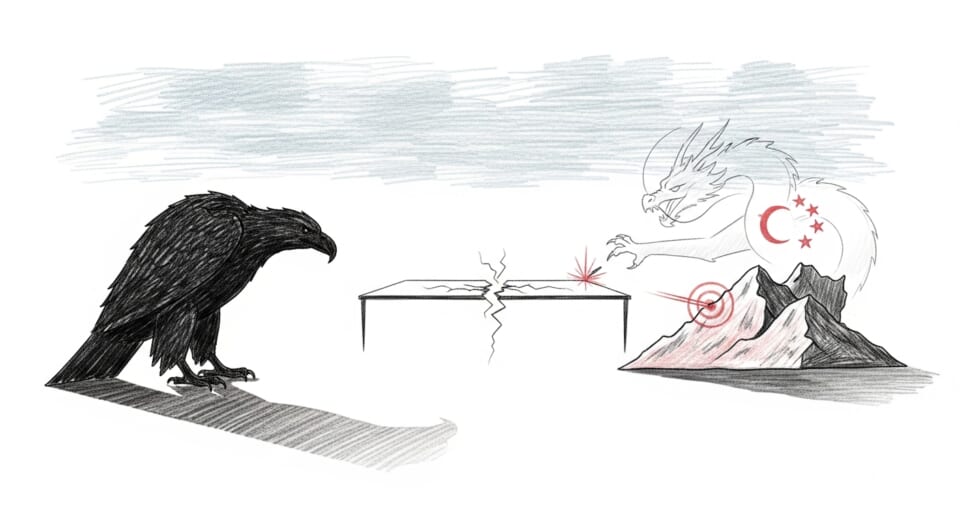
Iran has announced the development of a new mechanism to regulate maritime traffic through the strategic Strait of Hormuz, intending to charge fees for special services. The move comes amid heightened tensions with the United States, which is reportedly renewing military plans against Tehran that include seizing control of the vital waterway.
Ebrahim Azizi, head of the Iranian Parliament’s National Security Commission, stated that a “professional system” has been created to control traffic on a route defined by Iran. He specified that commercial vessels cooperating with Tehran would benefit from the system, while access would be denied to operators of the so-called “Freedom Project.”
This new Iranian initiative directly challenges recent US diplomatic assertions. A US envoy had claimed that China agreed to ensure Tehran would not impose tolls in the strait or develop nuclear weapons. Meanwhile, reports indicate that updated US military options include airstrikes, special forces operations, and targeting Iran’s underground nuclear facilities.
At a special session of the United Nations, Iran’s Permanent Representative Amir Saeed Iravani blamed the current crisis and its global economic impact on “powers who started the war against Iran.” He stated that Iran had faced two illegal acts of aggression in less than a year, violating the UN Charter, with effects that will persist long after military operations cease.
The diplomatic impasse continues as China calls for dialogue and a permanent ceasefire to resolve the tensions, asserting the time is not right for a US-backed UN resolution. In Tehran, the Deputy Foreign Minister reiterated that Iran has lost trust in Washington and will only participate in “serious” negotiations.
The United States has renewed military planning against Iran, with options under consideration including airstrikes and the targeting of key infrastructure, according to a New York Times report. In response, Iran’s Deputy Foreign Minister has stated that Tehran has lost trust in the US and will only participate in “serious” negotiations. Separately, China has called for dialogue to resolve the tensions, emphasizing that the issue of the Strait of Hormuz necessitates a permanent ceasefire. Beijing also asserted that the time is not right for a US-backed United Nations resolution.
📍 Latest Updates
Updated: 2:58 AM PKT — May 17, 2026
Amid the escalating crisis, Pakistan’s Interior Minister Mohsin Naqvi has made a sudden visit to Tehran in an effort to restart negotiations between the US and Iran. The mediation attempt comes as US officials reportedly prepare for a potential large-scale attack on Iranian military targets, though a US Congressman has praised Prime Minister Shehbaz Sharif for Pakistan’s leading role in the diplomatic push. Iranian officials have lauded Pakistan’s constructive role while also noting some positive signals from Washington.
Updated: 5:52 PM PKT — May 16, 2026
According to the same report, the US military plans also include special forces operations, targeting Iran’s underground nuclear facilities, and seizing control of the strategic Strait of Hormuz. In a related development, a US envoy has claimed that China has agreed to ensure Iran does not develop nuclear weapons or impose tolls in the strait.
[activity-stream-raw include=”9286,9309″ per_page=20 display_comments=0 sort=DESC]


Reactions and comments