

US-Iran Deal Talks Weaken Netanyahu’s Political Standing, Impact Oil Prices
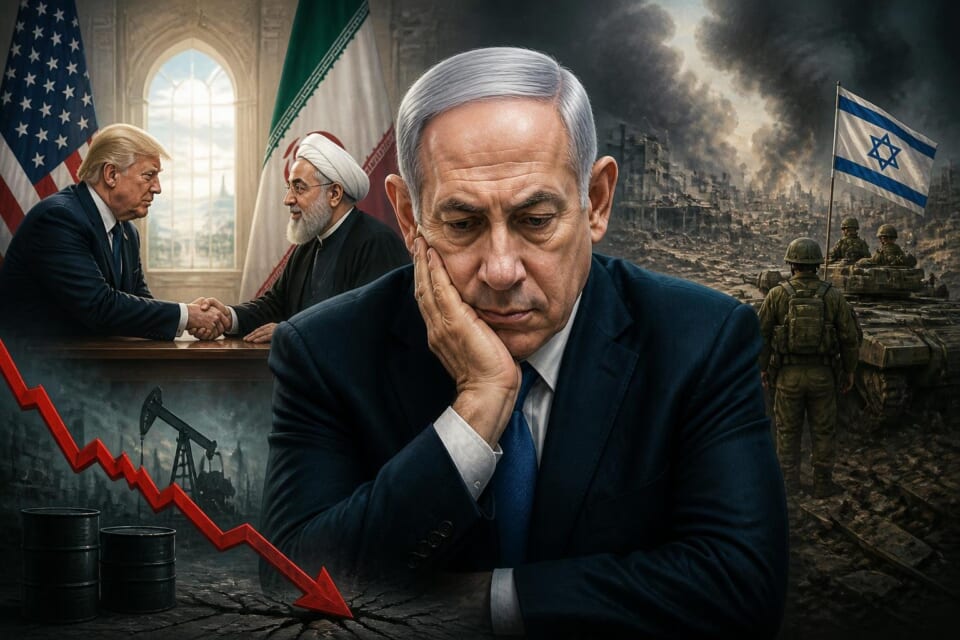
An emerging interim agreement between the United States and Iran is reportedly undermining the political standing of Israeli Prime Minister Benjamin Netanyahu, whose career has been built on the claim that he could uniquely influence Washington’s policy towards Tehran.
Analysts and former officials note that for decades, Netanyahu cultivated an image as the “American whisperer,” capable of keeping the US and Israel in strategic alignment on Iran. However, an interim pact to conclude the conflict that began in February indicates a shift, with US President Donald Trump’s administration now pursuing a settlement that treats Israeli objections as constraints rather than directives.
According to former US official Dennis Ross, Netanyahu is now “boxed in” between a US president seeking to end the conflict and a domestic political base that resists concessions, particularly in Lebanon. This is compounded by reports that Beirut is rejecting any deal that does not include a complete Israeli withdrawal.
The war, which Netanyahu had hoped would cement his legacy, has not resulted in the collapse of Iran’s government or the defeat of Lebanon’s Hezbollah. Instead, analysts suggest he is now isolated, constrained by his closest ally, and politically vulnerable ahead of an autumn election.
The diplomatic progress between Washington and Tehran has also had economic repercussions, with reports indicating that oil prices have fallen to new lows.
 Latest Updates
Updated: 10:51 AM PKT — June 25, 2026
Global oil prices have reportedly dropped amid market hopes for a potential agreement between the United States and Iran.
Separately, US Senator Marco Rubio has stated that work is continuing on the details of the possible deal.
Oil prices declined on Thursday, nearing pre-war levels as tankers began to exit the Strait of Hormuz, easing global supply concerns. The resumption of traffic follows an initial accord to end the conflict involving the US, Israel, and Iran that began on February 28.
Prompt-month Brent crude futures for August delivery fell to $73.34 a barrel, while U.S. West Texas Intermediate dropped to $70.07 a barrel.
According to US Energy Secretary Chris Wright, oil flows through the strait are approaching what they were before the conflict, with at least 20 million barrels having exited in the last 24 hours. He noted, however, that a return to complete normalcy would take a few weeks as the strait needs to be demined.
The accord has established a 60-day period for negotiations on more complex issues, including Iran’s nuclear program. Oman has also opened temporary routes to facilitate tanker departures from the strait.
[activity-stream-raw include=”70475,70494,70408,70191,70192,70210″ per_page=20 display_comments=0 sort=DESC]


Reactions and comments