

US and Iran Reach Potential Ceasefire Agreement
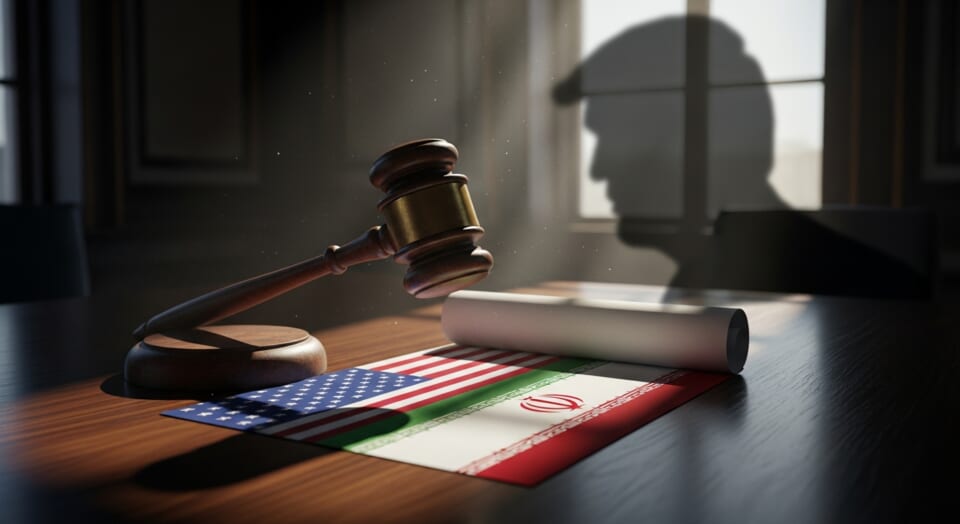
Iran and the US have reached a ceasefire agreement, which the White House confirms. Claims regarding a ceasefire extension have also emerged. Amidst updates on US-Iran tensions, an Axios claim has been explained. A potential ceasefire extension deal, described as a big diplomatic development, was reached on May 28, 2026.
 Latest Updates
Updated: 3:35 PM PKT — May 29, 2026
News of a potential ceasefire extension between the United States and Iran has triggered volatility in global commodity markets. Crude oil prices are fluctuating, with Brent crude trading at $94 per barrel and WTI at $89. Gold prices also rebounded from a two-month low, with spot gold rising 0.3% to $4,505.57 an ounce as investors weighed the diplomatic developments against inflation concerns.
Asian stock markets displayed a mixed trend, with Japan’s Nikkei index gaining 2.67% and Hong Kong’s Hang Seng up 1%. While market sentiment has improved, traders await formal confirmation of the agreement, which is reportedly pending US presidential approval. Iranian state media has noted that the deal has not yet been finalized.
Updated: 12:02 PM PKT — May 29, 2026
An emerging framework deal between the United States and Iran would extend the current ceasefire and reopen the vital Strait of Hormuz oil-shipping route, but would defer discussions on Tehran’s nuclear program, according to sources familiar with the matter. The potential agreement places US President Donald Trump in a difficult position, as he faces pressure from hardline Republicans to avoid making concessions to Iran, even as he seeks to lower soaring domestic gasoline prices ahead of midterm elections.
The proposed memorandum of understanding leaves several key issues unresolved, including the long-term status of the strait and details of potential sanctions relief. A White House official stated that negotiations are proceeding and that the president’s redline remains preventing Iran from obtaining a nuclear weapon. However, critics suggest the current terms may favor Tehran, and diplomatic efforts continue against the backdrop of a fragile truce strained by limited military exchanges.
Updated: 11:31 AM PKT — May 29, 2026
Optimism surrounding a potential US-Iran ceasefire extension has sent ripples through global markets, though the deal reportedly still awaits final approval from the US president. The prospect of a durable agreement, which would lift shipping restrictions in the Strait of Hormuz, has caused the US dollar to weaken against major currencies and crude oil prices to fall by more than 10%.
The shifting economic outlook has boosted commodity markets, with copper prices rising and on track for a second straight monthly gain. China’s yuan strengthened to its highest level in over three years in offshore trading. Gold prices also saw a reversal, edging higher after previously falling to a two-month low, as investors weigh the implications of reduced geopolitical tension and potential easing of inflationary pressures.
Updated: 11:01 AM PKT — May 29, 2026
The US dollar weakened against major currencies and was on track for a weekly loss Friday following reports that the United States and Iran have agreed to extend their ceasefire for another 60 days. The deal, which would also lift restrictions on shipping through the Strait of Hormuz, is reportedly still pending approval from the US president.
Despite the positive market reaction, which also saw a drop in oil prices, investors remain cautious amid mixed signals. US Vice President JD Vance remarked that the nations were “close” to a deal but “not there yet.” This sentiment is compounded by previous instances where claims of an imminent resolution were disputed or downplayed by one of the parties involved.
Updated: 10:30 AM PKT — May 29, 2026
Growing optimism over a potential agreement to end the US-Iran conflict prompted a rally in Asian stock markets and a drop in oil prices on Friday, easing concerns about disruptions to global energy supplies. Brent crude futures fell 0.9% to nearly $93 per barrel, while US benchmark West Texas Intermediate declined 1.1% to trade below $88 a barrel.
Major stock markets across the region posted strong gains, with benchmark indices in Tokyo, Seoul, and Taipei rising more than 2%, and Sydney’s market advancing by around 1%.
Updated: 9:59 AM PKT — May 29, 2026
While significant progress has been made towards extending the US-Iran ceasefire, US President Donald Trump has not yet given his final approval to the agreement, according to officials. US Vice President JD Vance confirmed that while both countries are “very close” to a deal, a few points remain under discussion, and the president is not yet ready to ratify the memorandum. Reports suggest a 60-day memorandum of understanding (MoU) has been agreed upon by negotiators to extend the ceasefire and initiate talks on Iran’s nuclear programme.
The prospect of a finalised deal has impacted global energy markets, with oil futures falling more than 1% on Friday. Brent crude futures were on track for their steepest weekly decline since early April. Analysts suggest that a confirmed agreement and the subsequent reopening of the Strait of Hormuz, a key oil transport route, could push crude prices lower, though the recovery of regional oil production is expected to be gradual.
Updated: 5:57 AM PKT — May 29, 2026
US Vice President JD Vance on Thursday stated that Washington and Tehran are “close” to a final agreement on extending their ceasefire but are “not there yet.”
Speaking to reporters, Vance identified a couple of sticking points in the talks, specifically concerning Iran’s enriched uranium stockpile and enrichment activities. He expressed cautious optimism, saying he felt “pretty good” about the prospects of a deal, but could not confirm when or if US President Donald Trump would sign the memorandum of understanding, as discussions were ongoing over “a couple of language points.”
Updated: 4:57 AM PKT — May 29, 2026
Conflicting reports over a potential 60-day extension to the US-Iran ceasefire have created volatility in global oil markets. While four sources familiar with the matter indicated an agreement had been reached, they noted it still requires approval from US President Donald Trump. Separately, Iran’s Tasnim news agency reported that the text of any potential memorandum of understanding has not been finalized or confirmed.
The market uncertainty saw Brent crude futures for July close down 0.6% at $93.71 a barrel, while US oil futures gained 0.3% to settle at $88.90. The session’s volatility was also influenced by an earlier report that Iran’s Revolutionary Guards had targeted a US air base. Traders continue to monitor developments related to the three-month conflict and the potential reopening of the Strait of Hormuz.
Updated: 3:26 AM PKT — May 29, 2026
US Vice President J.D. Vance has clarified that an agreement with Iran has not yet been finalized, though he stated the two countries are “very close” to a deal. In a statement, Vance asserted that the US is in a position to push back Tehran’s nuclear program.
Separately, US Treasury Secretary Scott Bessent outlined President Donald Trump’s “red lines” for any agreement. According to Bessent, Iran must renounce highly enriched uranium and ensure the Strait of Hormuz remains open.
Updated: 12:55 AM PKT — May 29, 2026
The White House has confirmed a 60-day ceasefire extension with Iran, part of a broader memorandum of understanding that now awaits final approval from US President Donald Trump. Under the terms reported by a US official, Iran has agreed to negotiate its nuclear program and commit to not acquiring nuclear weapons. While Iran has not yet officially confirmed the deal, US officials claim Tehran is ready to sign.
The agreement includes significant provisions for regional stability, requiring Iran to remove all mines from the Strait of Hormuz within 30 days in exchange for the US lifting its naval blockade. The deal also ensures uninterrupted and toll-free shipping through the strategic waterway. Future talks are expected to address the easing of sanctions on Iran and the release of its frozen assets.
Updated: 11:02 PM PKT — May 28, 2026
An Iranian parliamentary official has claimed that the United States has accepted most of Iran’s proposals in recent talks, marking significant progress. Fada Hossein Maleki, a member of the National Security and Foreign Affairs Commission, also expressed concern about President Donald Trump’s history of not honoring promises.
The White House has confirmed that a memorandum of understanding is under consideration but has not yet been signed by President Trump. The potential agreement reportedly includes an extension of the current ceasefire and Iran’s agreement to negotiate its nuclear program. Signing the memorandum would be the most significant diplomatic achievement since the conflict began.
[activity-stream-raw include=”26072,26056,26055,26059,26049,26035,25995,25996,25989,25976,25942,25929,25928,25795,25777,25765,25725,25744,25705,25668″ per_page=20 display_comments=0 sort=DESC]


Reactions and comments