

Transporters’ Alliance Holds Talks with Government Today
At a glance
- Transporters are on a nationwide 'wheel jam' strike since August 8, 2026.
- They protest daily fuel price revisions and increased toll taxes.
- The All Pakistan Goods Transport Alliance is holding talks with the government today, August 9, 2026.
Story so far
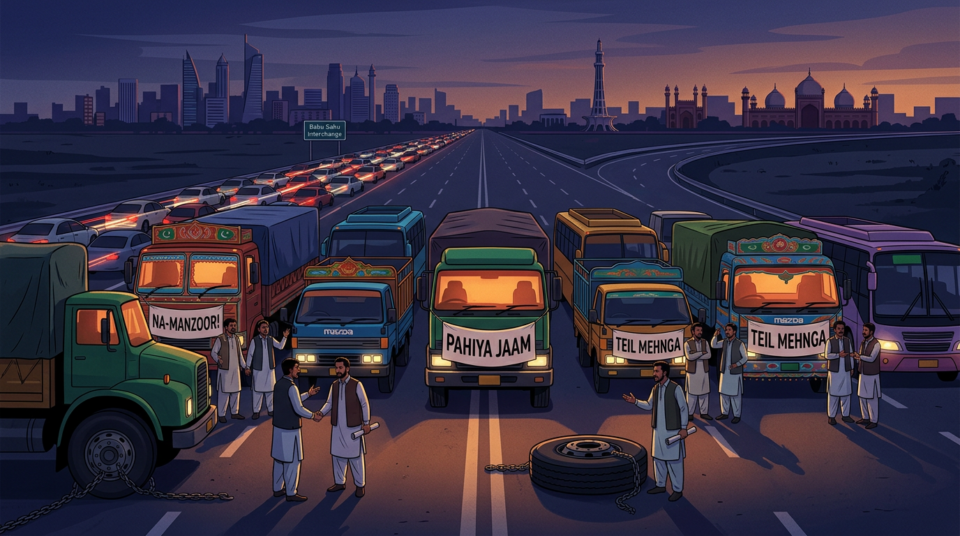
Transporters across Pakistan launched a nationwide 'wheel jam' strike on August 8, 2026, protesting daily fuel price revisions and increases in toll taxes. The strike, which continued for a second day on August 9, has suspended the movement of over 400,000 goods-carrying vehicles and affected ports and essential supplies. Demands include ending daily fuel price adjustments, reducing toll taxes to June 30, 2024 levels, reinstating 7,000 cancelled vehicle licenses, and reducing withholding tax from 7% to 2%. Transporters have rejected verbal assurances, demanding official notification of acceptance. The industrial community and other transport associations have expressed serious concern and support for the strike. The federal government had called a meeting with the transport alliance for Monday, August 10, with talks also scheduled with the Sindh government.
Latest development
The All Pakistan Goods Transport Alliance is holding talks with the government today, August 9, 2026, in Karachi, amidst their ongoing nationwide 'wheel jam' strike.
Latest updates
The All Pakistan Goods Transport Alliance is holding talks with the government today, August 9, 2026, in Karachi. This follows the ongoing nationwide 'wheel jam' strike protesting daily fuel price revisions and increased toll taxes.
The All Pakistan Goods Transport Alliance President, Malik Shahzad Awan, announced that negotiations with the federal government are scheduled for Monday at 11 AM, followed by talks with the Sindh government at 2 PM. Federal Minister for Communications Abdul Aleem Khan, along with representatives from the Ministries of Ports and Shipping, Finance, and Petroleum, are expected to participate in the federal-level discussions. The talks with the Sindh government will take place at the Commissioner’s Office.
Transporters have reiterated their stance that they will not call off the strike based solely on assurances, demanding that their conditions be formally approved. The nationwide strike, which entered its second day on Sunday, continues to press for the withdrawal of the daily diesel price adjustment, a reversal of toll tax increases to June 30, 2024 levels, and a reduction in withholding tax from 7 percent to 2 percent.
Separately, the Businessmen Panel (BMP) has expressed serious concern over the ongoing suspension of goods and oil transportation, warning that prolonged disruption could expose structural weaknesses in Pakistan’s supply chain and impose additional costs on the economy. BMP Chairman Mian Anjum Nisar emphasized the critical role of uninterrupted goods movement for manufacturing, agriculture, trade, and exports, calling for a predictable petroleum pricing framework.
The Pakistan Edible Oil Tankers Association has announced its participation in the ongoing goods transporters' strike.
The nationwide 'wheel jam' strike by goods transport and Mini Mazda transport associations continued for a second day on August 9, 2026, with the departure of vehicles from transport hubs completely suspended. Transporters reiterated their announcement of an indefinite strike until their demands are met, rejecting daily changes in petrol and diesel prices as harmful for business. They are now specifically demanding the reinstatement of 7,000 cancelled vehicle licenses and the withdrawal of additional taxes. Additionally, transporters have raised objections to various traffic fines and traffic laws, expressing reservations about government measures.
The nationwide 'wheel jam' strike by transporters has now also led to a shutdown of public transport, causing major disruption and sparking widespread concern.
The All Pakistan Petrol Pump Owners Association has announced its support for the ongoing goods transporters' strike. Vice Chairman Nauman Ali Butt stated that the Goods Transport Association's stance is correct and reflects the public's voice, rejecting daily oil price changes as unacceptable. Meanwhile, the federal government has called a meeting with the transport alliance for Monday, and a committee has been formed for these discussions. Earlier negotiations at the Commissioner's office had failed. The All Pakistan Goods Transport Alliance has also announced plans to expand their protest and march towards Governor Houses in all provinces if their demands are not met. Separately, the Oil Tanker Contractors Association has issued an ultimatum to the federal government, demanding contact by August 10, and has written a letter to Federal Petroleum Minister Ali Parvez Malik.
The nationwide 'wheel jam' strike by goods and oil transporters has led to the suspension of movement for over 400,000 goods-carrying vehicles. Nisar Hussain Jafry, Chairman of the Pakistan Goods Transporters Alliance, confirmed that the strike will continue until talks with concerned ministers regarding petroleum, transport, and ports are held on Monday. He noted that containers have already been unloaded at ports. Transporters expressed dissatisfaction with the daily fuel price mechanism, which complicates intercity movement due to fluctuating costs. They urged the government to reinstate a monthly fuel price review and reduce the withholding tax on transporters from 7% to 2%. Additionally, concerns were raised about the high number of toll plazas, located approximately every 30 kilometers, and issues related to parking heavy vehicles and driving licenses. Industrialists have reiterated warnings that prolonged disruption could halt production and jeopardize export commitments.
The industrial community has expressed serious concern over the ongoing nationwide transporters' strike, warning of potential disruptions to industrial and economic activity. Business leaders cautioned that a continued halt in raw material supplies could severely affect production, export commitments, and the broader economy.
Industrialists highlighted that the suspension of cargo movement could paralyse factories, disrupt production schedules, and jeopardise export commitments, ultimately impacting employment and Pakistan’s economy. Abdul Rehman Fudda, President of the SITE Association of Industry, stated that the strike has created an alarming situation for manufacturers, as the entire production system relies on timely supply of raw materials and delivery of finished goods. He warned that if factories fail to receive essential inputs, production will stall, and delays in dispatching finished products will worsen financial stress for industries.
Mr. Fudda added that Pakistan’s industries, particularly the export sector, are already facing multiple challenges, and transport disruption is an unbearable burden. He cautioned that if export consignments fail to reach buyers on time, industries could face penalties, price cuts, or claims for damages. He urged the government to urgently intervene and resolve the dispute through negotiations with goods transporters. Sheikh Tehseen, President of the Federal B Area Association of Trade and Industry, also feared that industries in the FB Area could be affected if the transport strike continues, leading to potential impacts on industrial production and difficulties in transporting finished goods.
The Communications Minister is reportedly reviewing the major issues currently faced by goods transporters across the country.
A federal minister has called goods transporters to Islamabad for discussions amid their ongoing nationwide 'wheel jam' strike.
The Communications Minister is reportedly reviewing major issues faced by goods transporters, as their nationwide 'wheel jam' strike continues to cause major disruption.
Latest Fact Checks
گڈز ٹرانسپورٹ کی ہڑتال، پورے ملک میں سامان کی سپلائی رک گئی
لاہور+جہانگیرہ (این این آئی+نامہ نگار)گڈز ٹرانسپورٹ اور منی مزدا ٹرانسپورٹ کی ہڑتال دوسرے روز بھی جاری رہی۔
Supply chain shock
The nationwide strike by goods transporters and oil tankers is an alarming development that the government cannot afford to…


Responses