

Netanyahu’s Gaza Plan Rejection: US Official Calls It ‘Only Way Forward’
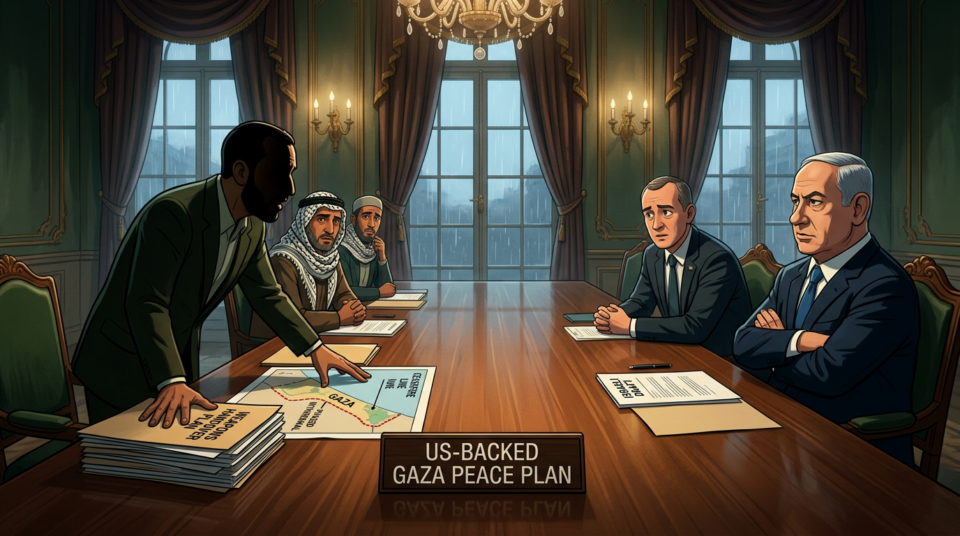
At a glance
- Israeli PM Netanyahu rejected a US-backed Gaza peace plan.
- A US official stated the plan is the "only way forward" to prevent future attacks.
- Iran has set conditions for opening the Strait of Hormuz amid regional tensions.
Story so far
Regional tensions persist with the White House reportedly considering an end to the conflict with Iran without a nuclear agreement, while Tehran has set conditions for opening the Strait of Hormuz. In a separate development, Israeli Prime Minister Benjamin Netanyahu has rejected a US-backed Gaza peace plan, refusing to withdraw from occupied territories and stating no independent Palestinian state will be formed under his leadership. Hamas has reacted strongly to this stance. Meanwhile, Houthi forces have reportedly attacked Yemen’s Mocha Port and a Saudi Aramco oil facility, further escalating regional instability.
Latest development
Nickolay Mladenov, head of President Donald Trump’s implementation board, stated that the US-backed Gaza plan rejected by Israeli Prime Minister Benjamin Netanyahu remains the “only way forward” to prevent a repeat of Hamas’s October 7, 2023 attack. Mladenov also noted that further talks are underway.
Latest updates
The US-backed plan for Gaza rejected on Sunday by Israeli Prime Minister Benjamin Netanyahu remains the “only way forward” to prevent a repeat of Hamas’s October 7, 2023 attack, the head of President Donald Trump’s implementation board said. Nickolay Mladenov, the Board of Peace’s high representative for Gaza, stated that further talks were underway. Netanyahu had told his cabinet that he rejected the plan, under which Hamas would hand over weapons to a nascent Palestinian governing body and Israel would start a withdrawal from the war-ravaged territory.
The White House was reportedly considering an end to the conflict with Iran without a nuclear agreement, according to a report in the Wall Street Journal. The report claims some officials wanted to declare victory by reopening the Strait of Hormuz.
In response, Tehran has reportedly set its own conditions for opening the strait, including the payment of compensation, the closure of US bases in Gulf countries, and the lifting of the current blockade.
In a separate development contributing to regional instability, Israeli Prime Minister Benjamin Netanyahu has rejected US President Trump's Gaza peace plan and refused to withdraw from occupied territories. He was quoted as saying that as long as he is prime minister, no independent Palestinian state will be formed. Hamas reportedly reacted strongly to the statement, insisting on the implementation of all stages of a prior agreement and demanding a clear timeline.
Meanwhile, other reports indicate that Houthi forces have attacked Yemen’s Mocha Port and a Saudi Aramco oil facility, further escalating tensions in the region.
Pakistan News will update this story as more confirmed details become available.
Israeli Prime Minister Benjamin Netanyahu on Sunday, August 9, 2026, explicitly rejected the US-backed Gaza peace plan, stating, "Israel rejects the 15-point document." He vowed that the Israeli military "will not carry out any withdrawal until Hamas is genuinely disarmed and will continue to thwart threats against our forces and our citizens." Netanyahu emphasized that Israel seeks "real disarmament, not fictitious disarmament," and wants Hamas to destroy its weapons, a goal that Board of Peace members reportedly consider not realistically achievable. He also confirmed that Israel is discussing its objections with the United States, noting that while some ideas are acceptable, others are not.
Israeli Prime Minister Benjamin Netanyahu on Sunday, August 9, 2026, explicitly rejected a US-backed Gaza peace plan, vowing no military pullout until Hamas is “genuinely” disarmed. This rejection followed over a week of escalating criticism and came ahead of elections, with Netanyahu facing pushback from his right-wing base. He stated, "Israel rejects the 15-point document," referring to a plan endorsed in late July by Hamas. Netanyahu affirmed that the Israeli military would not withdraw until Hamas is genuinely disarmed and would continue to thwart threats. The document had proposed Hamas surrendering weapons to a nascent Palestinian governing body, with Israel beginning phased withdrawals in tandem. However, after meeting Netanyahu last week, Trump’s Board of Peace, which is implementing the deal, reportedly backtracked, stating Israel would only need to withdraw after "complete" disarmament.
Hamas has clarified its readiness to proceed with the US-backed Gaza peace plan is conditional on Israel's approval and commencement of the agreement. Meanwhile, Israeli Prime Minister Benjamin Netanyahu stated on Tuesday that Israel had not agreed to the draft presented by mediators. This statement followed his meeting with the Board of Peace’s representative, Nickolay Mladenov, on Monday. Separately, the Israeli army has announced its intention to continue operations against Hamas.
Latest Fact Checks
یاہو کی ڈھٹائی برقرار، غزہ امن منصوبہ مسترد کردیا،معاہدے پر عملدرآمد کیلئے جنگ بندی خلاف ورزیاں بند کی جائیں، حماس
تل ابیب (نوائے وقت رپورٹ) اسرائیلی وزیراعظم نیتن یاہو نے غزہ سے متعلق امریکی صدر ڈونلڈ ٹرمپ کے بورڈ آف پیس کے 15 نکاتی منصوبے کو مسترد کر دیا۔
Gaza plan rejected by Netanyahu ‘only way forward’: Trump board
OCCUPIED JERUSALEM: The US-backed plan for Gaza rejected on Sunday by Israeli Prime Minister Benjamin Netanyahu remains the “only way forward” to prevent a repeat of Hamas’s October 7, 2023 attack, the head of President Donald Trump’s implementation


Responses