

ADB Trims Pakistan’s FY2027 Growth Forecast, Raises Inflation Projections
Story so far
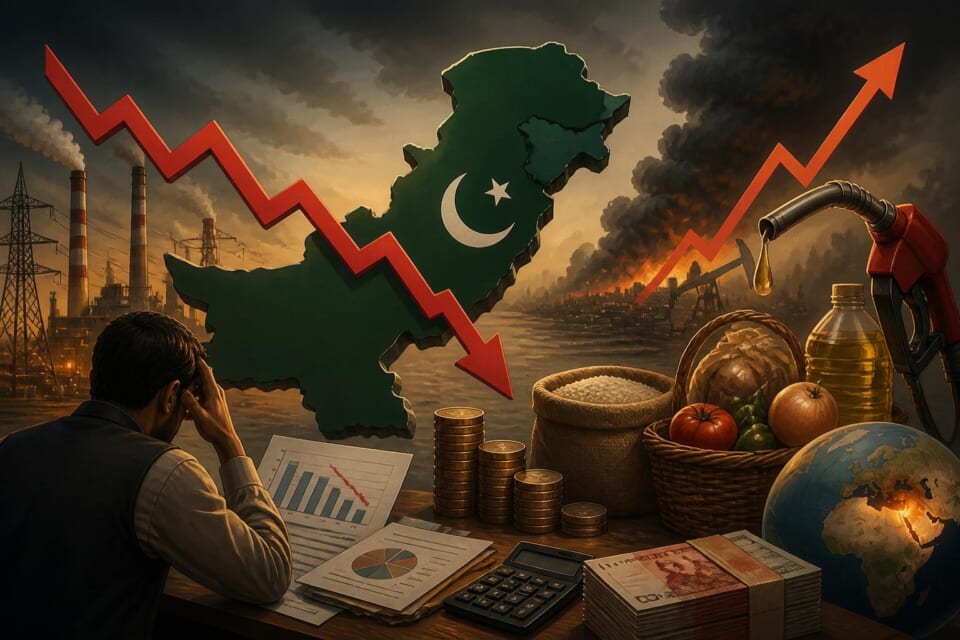
The Asian Development Bank (ADB) has revised down Pakistan’s economic growth forecast for Fiscal Year 2027 to 3.7 percent. This adjustment is primarily attributed to higher energy costs and increasing pressure on workers’ remittances. Concurrently, the ADB has sharply raised its inflation projections for both FY2026 and FY2027.
Latest updates
The Asian Development Bank (ADB) has revised Pakistan’s economic growth forecast for Fiscal Year 2027 downward to 3.7 percent, attributing this to higher energy costs and increasing pressure on workers’ remittances. The ADB also sharply enhanced its inflation projections for both FY2026 and FY2027, citing rising food and fuel prices and spillover risks from the Middle East conflict.
Preliminary data indicated that Pakistan’s economy expanded by 3.7 percent in FY2026. However, the bank warned that growth momentum is expected to remain constrained in FY2027. The ADB revised Pakistan’s inflation forecast upward to 7.2 percent for FY2026 and further increased the FY2027 inflation forecast to 8.3 percent, noting that persistent adverse spillovers from the Middle East conflict are likely to keep price pressures elevated.
The Asian Development Bank (ADB) has maintained Pakistan’s economic growth forecast at 3.7% for the current fiscal year. The bank also projects inflation for the current fiscal year at 8.3%, which is marginally above the government’s estimate.
In its July 2026 Asian Development Outlook (ADO), the ADB revised down its economic growth forecast for developing Asia and the Pacific to 4.9% for 2026, a decrease from 5.5% in 2025. This new estimate is 0.2 percentage points lower than its April projection. The report attributes this adjustment to the prolonged impact of the Middle East conflict on global energy markets, which has weakened the region’s economic prospects.
Despite a framework agreement reached in June, disruptions in global energy supplies are anticipated to subside slowly. Rising costs have extended beyond energy to fertilisers, commodities, and supply chains, contributing to increased inflationary pressures across the region. Regional inflation is now expected to average 4.3% in 2026, up from 3% in 2025, and 0.7 percentage points higher than the ADB’s April forecast. The inflation outlook for 2027 remains unchanged at 3.4%.
ADB Chief Economist Albert Park noted that while the June framework agreement could help stabilise global energy markets, the pace of recovery remains uncertain. He emphasized the need for policymakers to balance economic growth and inflation control amidst ongoing geopolitical challenges. The ADB also warned that renewed regional conflicts or prolonged geopolitical tensions could further disrupt energy markets and intensify inflationary and external economic pressures.


Responses