

US aircraft carrier Abraham Lincoln reportedly leaving region amid Iran tensions
At a glance
- The US and Iran are at a diplomatic standstill over the strategic Strait of Hormuz.
- The US aircraft carrier Abraham Lincoln is reportedly departing from the region.
- Some US Gulf allies are said to be reconsidering the presence of American military bases.
Story so far
Tensions between the United States and Iran remain high over the strategic Strait of Hormuz, with negotiations at a standstill. Iran insists on the lifting of sanctions before it ends its blockade, while the US demands the waterway be opened first. Amid this deadlock, reports suggest the US aircraft carrier Abraham Lincoln is leaving the region. This comes as some key US allies in the Gulf, including Saudi Arabia and the UAE, are reportedly reconsidering the utility of American military bases in their territories, citing disappointment with the US administration's handling of the crisis.
Latest development
In a new development, reports suggest the US aircraft carrier Abraham Lincoln is departing from the region. Details about a potential replacement have not been confirmed.
Latest updates
Amid ongoing tensions between Washington and Tehran, reports indicate that the US aircraft carrier Abraham Lincoln is leaving the region. The specific reasons for the carrier's departure and details about its potential replacement have not been officially confirmed.
The United States and Iran have reportedly agreed to a 60-day extension of the ceasefire concerning the Strait of Hormuz, according to reports on August 17, 2026.
The development comes after a previous ceasefire expired on August 15, leading to a standstill in negotiations. Alongside the extension, reports also indicate that Pakistan and Qatar have intensified their mediation efforts to find a diplomatic solution to the ongoing tensions.
Reports indicate that Saudi Arabia, Qatar, Kuwait, the UAE, and Bahrain are reconsidering the utility of US military bases in their respective territories. This development comes amid ongoing regional tensions and discussions about the future of US military presence in the Middle East.
The "ceasefire" agreement between the United States and Iran, reportedly reached around February, was set to expire on August 15. Discussions are now underway regarding its potential extension. Concurrently, reports indicate that the US is considering moving its military bases from the Middle East.
The "ceasefire" agreement between the United States and Iran, which was reportedly reached around February, is set to conclude on August 15. This development raises questions about a potential extension or a resumption of conflict between the two nations.
Tensions between the United States and Iran have escalated over the Strait of Hormuz, with negotiations between the two countries at a standstill.
According to reports, an Iranian official has rejected statements attributed to US President Trump regarding seizing the Strait of Hormuz. The official asserted that the strait "has been Iranian, is Iranian and will remain Iranian," and that it will only be opened or closed on Iran's command.
The exchange comes as an agreement reached around February is reportedly set to expire in August, with no resumption of talks.
Iran demands that the US accept all its terms and lift sanctions before it ends its blockade of the strait. In contrast, the US insists that Iran must open the waterway first, after which other issues can be discussed.
A potential mechanism mediated by Oman has reportedly been discussed, wherein ships would enter with Iran's permission and exit with Oman's, with Iran being informed. However, no final agreement has been reached on this proposal.
Pakistan News will update this story as more confirmed details become available.
Tensions between Iran and the United States have escalated, with Tehran asserting its control over the Strait of Hormuz and US President Donald Trump warning Americans to brace for continued high fuel prices as a result of the conflict.
In a post on Saturday, Iran's Deputy Foreign Minister Kazem Gharibabadi stated, "This strait will be opened and closed only under Iran’s command." He called on the U.S. to "accept the reality of defeat."
The sharp rhetoric follows comments from President Trump at a political rally in New York on Friday, where he described Tehran as "very evil" and suggested that paying "a tiny little bit more for your gasoline" was a necessary cost to prevent Iran from acquiring a nuclear weapon. According to the American Automobile Association, the average US price for a gallon of gasoline was approximately $4.08 on Friday, a 29% increase from the previous year.
In a separate development, reports from Nawa-i-Waqt indicated that President Trump had claimed he would soon declare the Strait of Hormuz as US territory. However, the same publication later cited a senior White House official who reportedly described the president's statement as a joke.
Meanwhile, US Vice President JD Vance stated that America's primary goal during the conflict is to keep domestic oil and gas prices down, with preventing Iran from obtaining a nuclear weapon as the second priority.
The United States has announced plans to impose its "toughest-ever" sanctions on Iran, with officials stating measures never seen before will be applied. President Donald Trump also declared his intention to soon designate the Strait of Hormuz as US territory. In a significant naval development, the USS George Washington replaced the USS Abraham Lincoln in the region, and US warships are reportedly moving towards Iran as part of preparations for a major naval operation. Meanwhile, Iran's parliamentary committee has approved an action plan concerning the Strait of Hormuz. Available reports say two UAE jets were destroyed, with details remaining unclear regarding a potential US ground operation in Iran. Separately, Mohsin Naqvi visited Iran.
Historically, the confrontation between the US and Iran intensified after President Trump scrapped an agreement negotiated by President Obama, which had halted nuclear proliferation. Following this, Iran intensified its uranium enrichment research and increased its influence in regional countries. The concept of a "greater Israel" is also cited as a long-term strategic objective of Western powers in the region.
Latest Fact Checks
Iran defiant on strait as Trump tells Americans to accept high gas prices
DUBAI/CAIRO/GARDEN CITY, NEW YORK: Iran called on the U.S. to accept defeat while President Donald Trump blasted Tehran as “very evil” and told Americans to brace for continued high fuel prices as a result of the war. Progress toward peace talks and
ٹرمپ کا آبنائے ہرمز کو امریکی علاقہ بنانے کا بیان مذاق تھا؛عہدیداروائٹ ہاؤس
وائٹ ہاؤس کے سینئر عہدیدار نے صدر ٹرمپ کے بیان کو مضحکہ خیز قرار دے دیا۔
بہت جلد میں آبنائے ہرمز کو امریکا کا علاقہ قرار دینے کا اعلان کروں گا : صدر ٹرمپ
امریکی صدر ڈونلڈ ٹرمپ نے کہا ہے کہ وہ جلد آبنائے ہرمز کو امریکی علاقہ قرار دینے کا اعلان کریں گے۔
The clock is ticking
USA-Iran-Washington-Tel Aviv–Tehran: Is Israel using the physical strength to continue waging the war against all. How long? PM Netanyahu and…
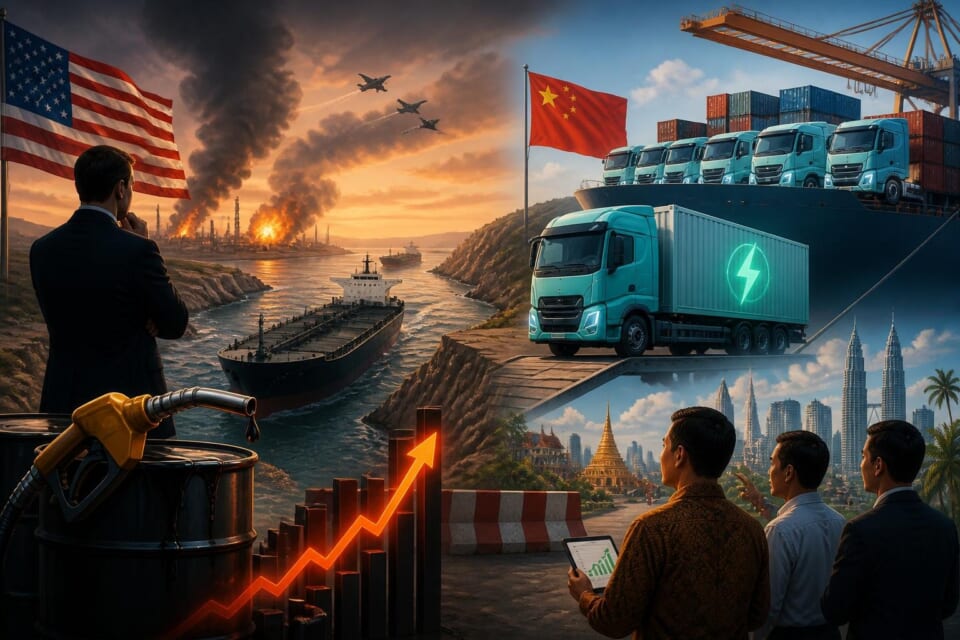
Iran war a boon for China’s e-trucks, fuelling export surge
BEIJING: China’s exports of electric trucks to other Asian countries have spiked, adding to a surge in domestic sales as higher fuel costs as a result of the Iran war accelerate regional electrification. China’s rapid adoption of e-trucks — from ligh
US says lower oil prices priority in Iran war
WASHINGTON: The top US priority now in the Iran war is no longer its nuclear program but to bring gasoline prices down for American consumers, the vice president said Thursday, with the treasury secretary adding that new economic punishment to wear d


Responses