

US, Iran Exchange Military Strikes; Regional Tensions Push Oil Prices Higher
 2 months ago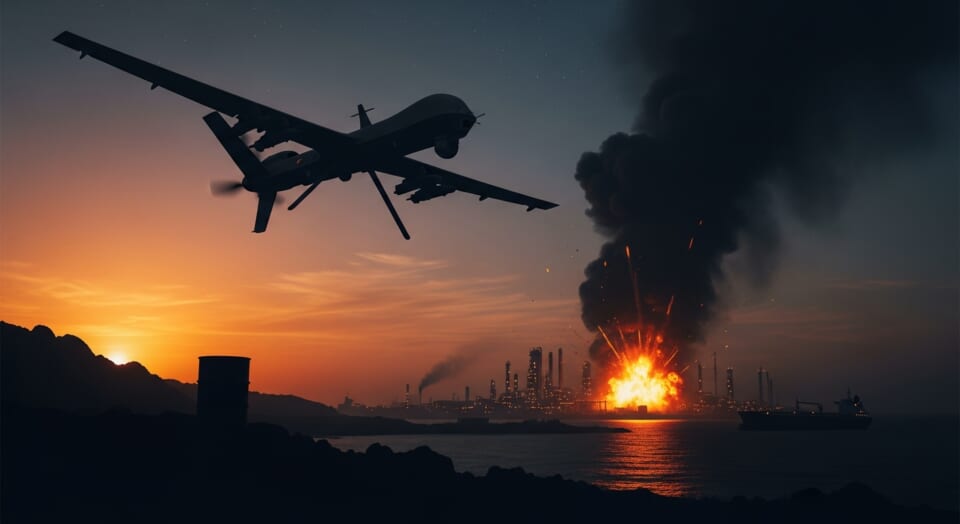
The United States and Iran exchanged military strikes over the weekend, escalating regional tensions and causing global oil prices to surge by over 2% on Monday amid fears of wider supply disruptions. The latest hostilities, coupled with expanding Israeli military operations in Lebanon, have dampened hopes for a durable ceasefire agreement between Washington and Tehran.
US Central Command (CENTCOM) announced it conducted “self-defense strikes” on Saturday and Sunday against Iranian military sites in Goruk and on Qeshm Island. The strikes targeted radar installations, drone command and control facilities, air defenses, and a ground control station. CENTCOM stated the action was a response to “aggressive Iranian actions,” including the downing of a US MQ-1 drone over international waters and threats posed by Iranian attack drones to commercial shipping. No American personnel were harmed.
In response, Iran’s Islamic Revolutionary Guard Corps (IRGC) claimed on Monday it had targeted a US air base used in the attack on southern Iran, without specifying the location. Concurrently, air defense systems in Kuwait, which hosts a major US military base, were activated to intercept incoming missile and drone attacks.
The exchanges are the latest in a series of sporadic strikes between the two sides since a ceasefire took effect in early April. They occur amid ongoing negotiations to end a three-month-old war launched by the US and Israel, which has killed thousands in Iran and Lebanon and strained the global economy by disrupting the Strait of Hormuz. US President Donald Trump has stated his primary goal is to prevent Iran from developing a nuclear weapon, an ambition Tehran denies.
Diplomatic efforts are complicated by several factors. Negotiations remain stalled over Tehran’s demands for the lifting of sanctions and the release of billions in frozen oil revenues. Simultaneously, Israel’s conflict with Hezbollah in Lebanon is a major impediment, with Prime Minister Benjamin Netanyahu ordering troops to advance further into the country on Sunday. US Secretary of State Marco Rubio has reportedly proposed a “gradual de-escalation” plan after speaking with both Israeli and Lebanese leaders.
The renewed instability sent ripples through energy markets. By early trading Monday, US benchmark crude had climbed to $89.65 per barrel, while Brent crude rose to $93.17.
 Latest Updates
Updated: 9:28 PM PKT — June 1, 2026
The Pakistan Stock Exchange (PSX) experienced a significant downturn on Monday, with the benchmark index plunging 3,362 points to close at 170,600. Analysts attributed the bearish trend primarily to renewed geopolitical tensions between the United States and Iran, which pushed global oil prices above $90 per barrel and soured investor sentiment. Reports of a possible sales tax increase in the upcoming federal budget also contributed to the selling pressure.
Updated: 11:11 AM PKT — June 1, 2026
Iran’s Revolutionary Guards announced on Monday they retaliated for recent US strikes by targeting an American air base. This followed US Central Command’s confirmation of strikes on Iran’s Gulf coast. In a related development, air defense systems in Kuwait, which hosts a major US base, were activated on Monday to intercept missile and drone attacks.
Concurrently, Iranian Kurdish opposition groups based in northern Iraq reported missile attacks on their facilities. The Komala party and the Kurdistan Freedom Party both claimed their bases in the Kurdistan region were struck by Iranian missiles, with one group stating it was the latest in dozens of similar attacks. Iranian officials have not yet commented on these specific allegations.
7 weeks ago
Such News YouTube
US Launches Intense Strikes on Iran | Iran Responds Following US Military Action | Arif Kazmi Vlog
#US #Iran
7 weeks ago
GNN YouTube
Iran-US Talks Collapse? Reports of Missile Attacks Raise Regional Tensions I GNN
#IranUS #MissileAttacks
7 weeks ago
ARY News YouTube
US-Iran Tensions Escalate: Fresh Attacks Amid Ongoing Peace Talks #usiranwar #iranuswar #shorts
#IranUSConflict #PeaceTalks
7 weeks ago
Samaa TV YouTube
US-Iran War | Iran Launches Retaliatory Strikes After US bombing | Breaking News | SAMAA TV
#IranUSConflict #RetaliatoryStrikes
7 weeks ago
24 News HD YouTube
US-Iran WAR – Iran Strikes US Military Base – Massive Explosions Erupt Across the Gulf – Shocking!
#IranUSConflict #BlastIncident #Tehran
7 weeks ago
Hum News YouTube
Breaking: Strikes on US Military Bases Amid Iran Tensions | Hum News | Pakistan
#IranUSConflict #MilitaryBase
7 weeks ago
Hum News YouTube
Iran vs USA: Military Bases Under Attack | Hum News | Pakistan
#IranUSConflict
7 weeks ago
24 News HD YouTube
Airspace Tensions High – Iran Shot Down US Drone MQ-1 | New Military Claims Emerge | 24 News HD
#Drones #IranUSConflict
7 weeks ago
24 News HD YouTube
US-Iran War Tensions – Iran Launches Speed Boat with Cruise Missiles Capability – Shocking Reveal
#USIranWar #Iran
7 weeks ago
ARY News YouTube
BBC: Iran Claims Damage to 20 US Bases in the Middle East
#IRGC #IranUSConflict
7 weeks ago
Samaa TV YouTube
US Iran War Live | Iran Launches New Attack on US Base in Kuwait | SAMAA TV
#Iran #Kuwait #USBase
7 weeks ago
Dawn News YouTube
US Third Strike on Iran in One Week | Escalation in Middle East | Breaking News | Dawn News
#Iran #Drones #USStrike
7 weeks ago
Samaa TV YouTube
Iran Releases Video of Missile Strike on Kuwait | #Shorts | Samaa TV
#Iran #Kuwait #BlastIncident
7 weeks ago
Express News YouTube
US and Iran Exchange Strikes on Military Targets Amid Rising Tensions | Breaking News |Pakistan News
#Tehran #USIranWar
7 weeks ago
Geo News YouTube
Kuwait Air Defense Thwarts Missile and Drone Attacks, Says Army | Breaking News
#Kuwait #Drones
7 weeks ago
Samaa TV YouTube
Iran Launches Fresh Missile Attack on Kuwait | #Shorts | Samaa TV
#Iran #Kuwait
7 weeks ago
Samaa TV YouTube
Iran–US Tensions Escalate | Air Raid Sirens Sound in Kuwait | #Shorts | Samaa TV
#IranUSTensions #Kuwait
7 weeks ago
Such News YouTube
Iran Lawmakers Make Major Hormuz Demand! | Breaking News | Such News
#StraitOfHormuz #Tehran
7 weeks ago
Dawn News YouTube
US Military Horrific Bombing To Iran’s Grok City and Qeshm Island | Breaking News | Dawn News
#USIranWar #QeshmIsland
7 weeks ago
Such News YouTube
Iran Lawmakers Make Major Hormuz Demand! | Breaking News | Such News
#Iran