

0Coins

Three Scientists Win 2026 Nobel Prize in Medicine for Optogenetics
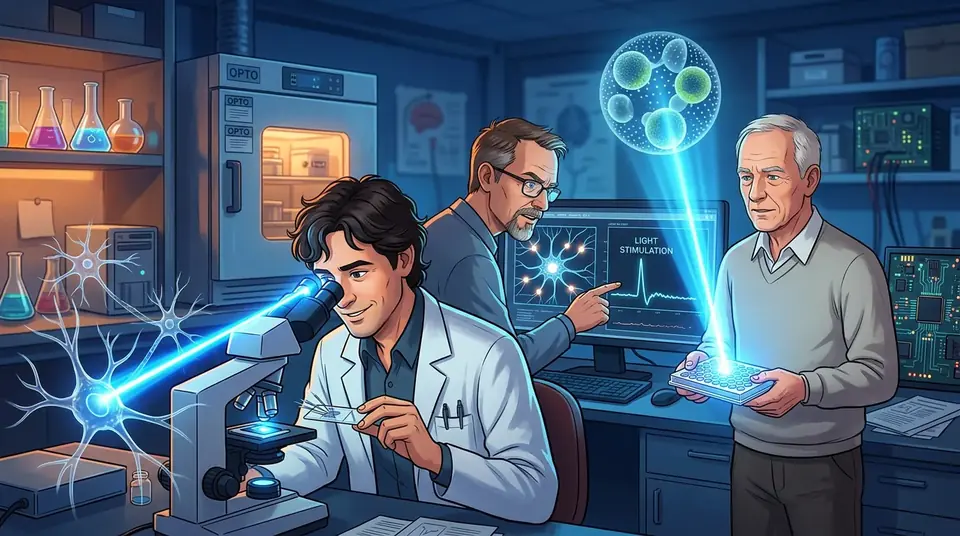
Animated editorial illustration for: Three Scientists Win 2026 Nobel Prize in Medicine for Optogenetics
0:000:00
AI-assisted editorial illustration — not a photograph.

At a glance

  • Karl Deisseroth, Peter Hegemann, and Georg Nagel won the 2026 Nobel Prize in Medicine.
  • They were awarded for developing optogenetics, a technique to control brain cells with light.
  • The method is being trialed to restore vision and could improve cochlear implants.

Story so far

The 2026 Nobel Prize in Physiology or Medicine has been awarded to American Karl Deisseroth and Germans Peter Hegemann and Georg Nagel for developing optogenetics. This revolutionary technique uses light to control the activity of individual nerve cells. Their discoveries, which began in the early 1990s, have transformed neuroscience and are now being explored for clinical applications, including potential treatments for blindness and hearing loss.

Latest development

The Nobel Assembly provided further details on the prize-winning work, highlighting its potential clinical applications. Researchers are using optogenetics in trials to restore vision in patients with retinitis pigmentosa and hope it may also improve cochlear implants.

Latest updates

Further details have emerged about the prize-winning work, including its potential clinical applications. Researchers are currently using optogenetics in clinical trials to help restore vision to people blinded by retinitis pigmentosa. There is also hope that the technique could improve cochlear implants by allowing for more precise stimulation of the auditory nerve.

The discovery process began in the early 1990s with Peter Hegemann's work on algae. This led to Georg Nagel's discovery of channelrhodopsin-2, a light-sensitive protein. In 2005, Karl Deisseroth successfully applied the technique to nerve cells in rats, with the method being named optogenetics a year later. According to the Nobel Assembly, all three laureates were surprised and delighted to receive the news.

Responses

  1. It’s incredible to see fundamental research from the 90s lead to clinical trials today. The journey from identifying a protein to potentially restoring sight shows the long-term value of investing in basic science.

Latest Fact Checks

>

Share story