

PHC Rejects Afghan Officials’ Pleas Against Arrest, Deportation
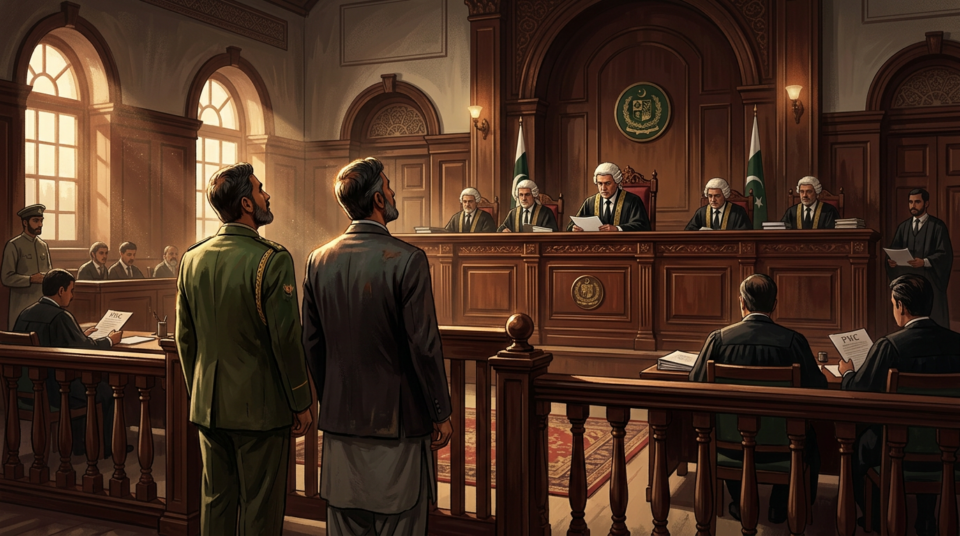
At a glance
- Peshawar High Court dismissed petitions from former Afghan officials and their families.
- Petitioners sought protection from arrest and deportation, fearing Taliban persecution.
- The court ruled that immigration matters fall under the executive branch and cited "mere apprehension" for dismissal.
Story so far
The Peshawar High Court (PHC) had previously dismissed petitions from two former Afghan security officials, General Baryalai Sharifi and Special Agent Abdul Mujeeb Ghairat, who sought a temporary stay in Pakistan on humanitarian grounds. They requested emergency medical treatment and protection from arrest or deportation, stating their lives were in danger in Afghanistan. The court ruled that matters concerning visas and immigration status fall under the executive branch, not the judiciary, and found no grounds for intervention under Article 199 of the Constitution. The latest ruling reiterated this stance, dismissing their pleas along with their families, citing "mere apprehension" of future harm.
Latest development
The Peshawar High Court has rejected petitions from former Afghan general Baryalai Sharifi and special agent Abdul Mujeeb Ghairat, along with their families, who feared persecution by the Taliban if deported. The court cited "mere apprehension" as insufficient grounds.
Latest updates
The Peshawar High Court (PHC) has rejected petitions filed by a former general of the erstwhile Afghan National Army and a special agent of the former Afghan Presidential Protective Service (PPS), along with their families. The petitioners, identified as former general Baryalai Sharifi and former PPS special agent Abdul Mujeeb Ghairat, had sought protection against imminent arrest and deportation by law enforcement agencies, citing fear of persecution by the Taliban government in Afghanistan if sent back.
Their counsel informed the court that Mr. Sharifi had served as a general and that he and his family had received threats from the current Afghan regime. It was also stated that Mr. Sharifi’s wife had worked as an assistant doctor in the PPS, and his son as a training camp guard. The court, in its four-page written order, observed that the case rested upon a "mere apprehension" of future arrest, detention, or deportation, without any concrete cause of action or demonstrated violation of law.
The petitioners were identified as Abdul Mujeeb Ghairat, a special agent with the Afghan Presidential Protective Service, and Baryalai Sharifi, a general in the former Afghan National Army. They had also claimed to have applied online for visa renewal. The court's written verdict was issued by Justice Waqar Ahmed and Justice Kamran Hayat Miankhel.
Latest Fact Checks
Ex-Afghan general, agent’s pleas against arrest, deportation rejected
• Petitioners cite fear of Taliban persecution if sent back to Afghanistan • Peshawar High Court notes fears of detention and removal don’t constitute valid cause of action • Rules immigration, visa and residency matters fall within executive’s domai
PHC rejects pleas of two ex-Afghan generals seeking stay in Pakistan
PESHAWAR: The Peshawar High Court (PHC) on Thursday dismissed petitions filed by two former Afghan military officials seeking temporary stay in Pakistan. Both petitioners pleaded that they were facing serious life threats if they were sent back to Af


Responses