

Iran’s President Pezeshkian offers US conditions for reopening Strait of Hormuz
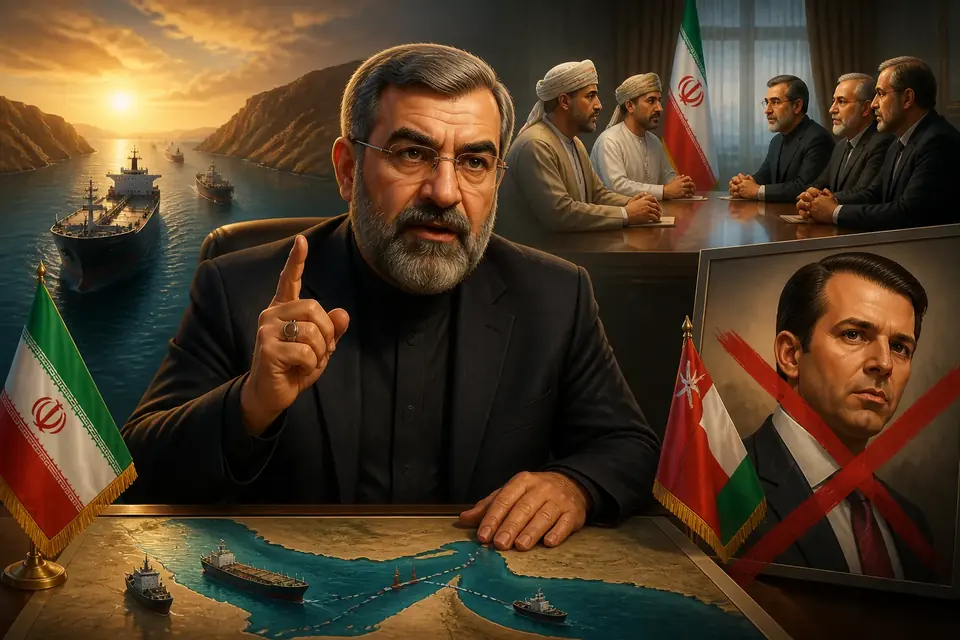
At a glance
- Iranian President Masoud Pezeshkian has offered the US conditions to reopen the Strait of Hormuz.
- The IRGC maintains the strait remains closed to vessels without Tehran's permission.
- Tensions have been high for six months, with thousands of seafarers stranded.
Story so far
Tensions between Iran and the United States have centered on the Strait of Hormuz, a critical maritime chokepoint. Iran previously set four conditions for the US to fully reopen the strait, following a temporary shipping route agreement with Oman. However, Iran's Islamic Revolutionary Guard Corps (IRGC) has maintained that the strait remains closed to unauthorized vessels. The dispute, which has been ongoing for six months, has left thousands of seafarers stranded. Pakistan has reportedly been involved in mediating talks. Iran has also stated its nuclear and missile programs will continue.
Latest development
Iranian President Masoud Pezeshkian has made an offer to the United States, presenting key conditions for the full reopening of the strategic Strait of Hormuz.
Latest updates
Iranian President Masoud Pezeshkian has reportedly made a significant offer to the United States, outlining key conditions for the full reopening of the Strait of Hormuz, according to available reports on August 29.
This development specifies the source of the proposal, which was previously attributed more generally to Iran.
Iran has reportedly set four conditions for the complete reopening of the Strait of Hormuz, according to the latest available information.
Iran and Oman have reportedly agreed to a temporary shipping route through the Strait of Hormuz, a strategic chokepoint that has been at the center of escalating tensions. The development comes as Iran's Islamic Revolutionary Guard Corps (IRGC) rejected claims by the United States that the strait had been opened.
Tehran has also reiterated that the strait remains closed to all vessels operating without its permission. This series of announcements follows a period of heightened conflict with the US and ongoing diplomatic efforts to resolve the situation.
Tensions over the Strait of Hormuz have escalated following new claims by US President Donald Trump, who again referred to the critical waterway as US territory. In a sharp rebuke, Iran's Deputy Foreign Minister described President Trump as "schizophrenic" over the statement.
Amid the heightened rhetoric, reports from international maritime organizations indicate that approximately 6,000 seafarers are now stranded on vessels within the strait.
These developments come as diplomatic talks regarding the reopening of the strait are said to be gaining momentum, with Iran continuing to insist on its conditions being met before allowing passage.
Reports have emerged suggesting a potential agreement is being discussed for the reopening of the Strait of Hormuz. This comes amid speculation about a possible change in Washington's strategy towards Iran after a prolonged conflict.
Reports indicate that after six months of conflict between the United States and Iran, Pakistan has become involved in ceasefire negotiations between the two countries. The development comes as Iran maintains its conditions for reopening the strategic Strait of Hormuz, which include an end to the war in the region.
Iran has formally presented a set of conditions to the United States, via mediators, for the reopening of the strategic Strait of Hormuz. While the full list of demands has not been publicly detailed, reports indicate they are significant and build upon earlier statements by Iranian officials.
In a new development concerning the standoff over the Strait of Hormuz, Iran's Deputy Foreign Minister has reacted to a social media post by US President Donald Trump. While the specifics of the post and the full reaction have not been detailed, the exchange is being linked to the ongoing tensions in the Middle East.
In a new development amid the ongoing standoff over the Strait of Hormuz, Iran is reportedly preparing a list of conditions for reopening the strategic waterway. According to available information, these conditions are being conveyed to the United States through mediators.
Iran has announced that its nuclear and missile programs will continue, according to reports on Friday.
The declaration comes amid an ongoing standoff with the United States over the Strait of Hormuz.
The head of Iran's Supreme National Security Council, Mohsen Rezaei, has issued a stern warning to the United States, stating that any aggression against Iran would be met with an attack on US interests, causing damage "that will be remembered in history."
In a statement on Friday, Rezaei accused Washington of deception in past negotiations and said Iran no longer trusts the US. He reiterated that the Strait of Hormuz will not be reopened on American terms.
Rezaei demanded that the US first take "practical steps" to meet Iran's conditions before the strait is reopened.
Latest Fact Checks
امریکا نے کارروائی کی تو ایسا نقصان پہنچائیں گے جو تاریخ میں یاد رہے گا، محسن رضائی
ایران کی سپریم نیشنل سکیورٹی کونسل کے سیکرٹری محسن رضائی نے کہا ہے کہ امریکا نے کارروائی کی تو ایسا نقصان پہنچائیں گے جو تاریخ میں یاد رہے گا۔


Responses