

Iran, Oman Finalize Hormuz Shipping Deal
At a glance
- Iran and Oman have agreed on a maritime route for the Strait of Hormuz.
- A joint declaration is in its final stages.
- Iran states the full reopening of the strait depends on the US ending its naval blockade.
Story so far
Iran and Oman have reached a consensus on a proposed new maritime route in the Strait of Hormuz, with a joint declaration in its final stages. Iran's foreign ministry spokesperson, Ismail Baghaei, clarified that this agreement does not mean the Strait is now secure, as its full reopening depends on the United States ending its naval blockade of Iranian ports. Iran has maintained de facto control of the strait since February 28, following a conflict involving the US and Israel. Discussions are also ongoing with Pakistan and Qatar on various matters, with Pakistan actively involved in diplomatic efforts for peace.
Latest development
Iran and Oman have agreed on a maritime route for the Strait of Hormuz, with a joint declaration in final stages. However, Iran emphasizes that the full reopening of the strait depends on the United States ending its naval blockade. Diplomatic signals regarding this agreement have reached Pakistan, highlighting Pakistan's efforts towards peace.
Latest updates
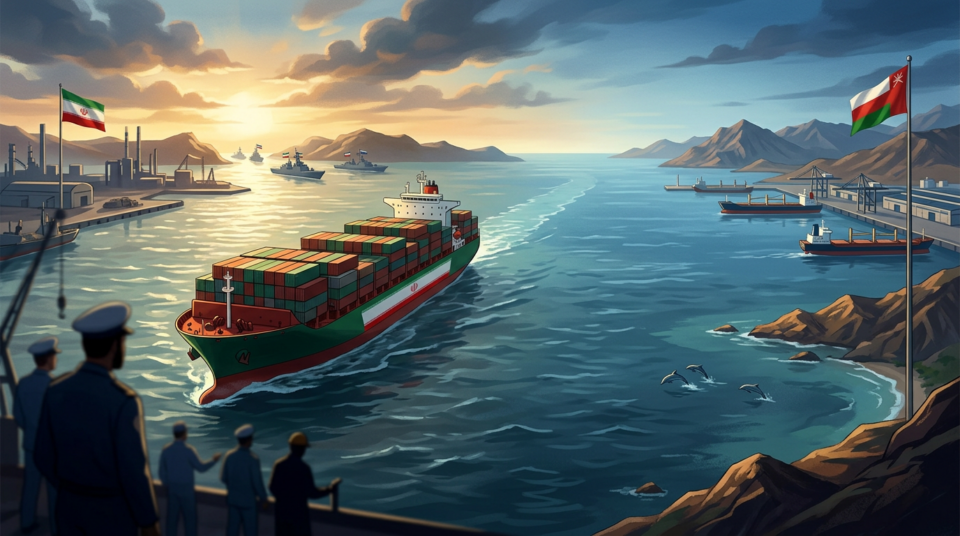
Iran and Oman have agreed on a route for ships transiting the Strait of Hormuz and are finalizing arrangements for jointly managing the waterway, according to Tehran’s foreign ministry. However, official sources briefing Iranian media stressed that any reopening of the strait would depend on the United States fulfilling what Tehran sees as its commitment to end its own naval blockade of Iran’s ports.
Iran seized de facto control of the strait after the United States and Israel launched their war against the country on February 28. Spokesman Esmaeil Baqaei stated that the geographical coordinates of the envisaged route have been agreed upon, and a joint statement is in its final review and drafting stage, provided no third parties obstruct the process. Baqaei clarified that even with an understanding, the strait would not be safe for all vessels, citing the continued existence of factors making it insecure due to the United States, particularly its naval blockade and aggressive actions against Iran.
Before the conflict, the Strait of Hormuz carried approximately one-fifth of the world’s oil and LNG exports, and prices have surged repeatedly since the dispute erupted. After imposing an effective blockade, Iran insisted ships take a route hugging the Iranian coast, while many vessels opted for a southern route closer to Oman. Diplomatic signals regarding Iran's agreement to reopen the Strait of Hormuz have reached Pakistan, indicating Pakistan's efforts towards peace and an interim deal mediated by Oman.
Iran and Oman have reached a consensus on a proposed new maritime route in the Strait of Hormuz, according to a statement from the Iranian Foreign Ministry spokesperson, Ismail Baghaei. He added that a joint declaration is in its final stages, provided there is no external interference.
However, the spokesperson clarified that the agreement does not mean the Strait of Hormuz is now secure.
Baghaei also mentioned that discussions are ongoing with Pakistan and Qatar on various other matters.
A proposed deal between Iran and Oman could grant Tehran control over ships entering the Gulf through the Strait of Hormuz, a senior Iranian source and two regional officials told Reuters on Wednesday.
The development is being described as one of the biggest potential concessions to Iran, but the sources cautioned that a final deal was not imminent and important details still needed to be agreed upon. This contrasts with recent statements by U.S. President Donald Trump suggesting a deal was close.
According to one regional source, a key point of negotiation is the definition of "control," with Gulf negotiators insisting that regional countries supervise ship inspections and that any payment of fees be voluntary.
The senior Iranian source stated that the current text of a proposed agreement envisions Iran controlling inbound vessels, with a major sticking point being what role, if any, Iran would have over ships heading out of the Gulf.
U.S. officials have previously maintained they would not accept any arrangement that gives Iran control over the world's most critical trade route for energy supplies.
Pakistan News will update this story as more confirmed details become available.
Iran is reportedly seeking greater control over maritime traffic through the Strait of Hormuz as part of ongoing discussions with Oman. Media reports, citing Iranian officials, indicate that a proposed framework would grant Iran oversight of vessels entering the strait, enable monitoring of outbound traffic, and allow intervention when deemed necessary.
Under this plan, outbound ships would navigate a route between Iran and Oman, with Oman issuing final departure clearance after informing Iranian authorities. An Iranian official familiar with the discussions stated that Tehran is unlikely to soften its stance on this issue. These negotiations follow comments made in late July by Iranian Deputy Foreign Minister Kazem Gharibabadi, who confirmed Tehran's rejection of an Omani proposal to equally divide transit responsibilities between the two countries. Gharibabadi argued that the arrangement did not address Iran’s security concerns, insisting that any long-term solution requires regional stability. Control over the Strait of Hormuz remains a significant obstacle to resolving the US-Iran conflict. Iranian President Masoud Pezeshkian has reiterated that Tehran does not wish for the conflict to spread, affirming the country's commitment to defending its borders without intending to expand the war. Currently, Iran has suspended most shipping activity through the Strait of Hormuz as the US continues to enforce restrictions on Iranian shipping and port operations.
Uncertainty surrounding the status of US-Iran talks has been heightened following a recent attack on shipping in the Strait of Hormuz. A cargo vessel reportedly broadcast that it had been hit by an unknown projectile near the strait, off Oman’s coast, according to the United Kingdom Maritime Trade Operations (UKMTO) agency. This incident has underscored the risks to global energy flows, with traffic through the vital waterway remaining largely slow.
Oil prices rebounded on Tuesday, August 4, after a previous plunge, with Brent futures rising 1.3% to $84.89 a barrel and US West Texas Intermediate (WTI) crude up 1% to $81.11. This rebound followed a drop in prices after US President Donald Trump stated on Sunday, August 2, that he was holding off on new attacks on Iran pending ongoing talks. However, on Monday, August 3, Iran’s Foreign Ministry spokesman Esmail Baghaei reiterated that no negotiations with the US were taking place. Analysts noted the considerable uncertainty, with Iran denying talks and Trump issuing warnings if no deal materializes, suggesting ample room for renewed escalation. The dispute over the Strait of Hormuz remains a central sticking point, with Washington claiming a June memorandum of understanding required Iran to open the waterway, while Tehran asserts the text preserved its authority. Separately, President Trump also stated that any ongoing talks with Iran would be 'long and complex'.
US President Donald Trump stated on Monday that the ongoing talks with Iran represent its "last chance to sign a good document" before "decapitation." Trump claimed that the US and Iran are in discussions that could see the Strait of Hormuz fully reopened as early as tomorrow, with subsequent talks planned for an agreement aimed at Iran's "denuclearization."
Despite Tehran's denials of direct negotiations, Trump insisted that talks between the two countries are underway. In a social media post, he described the Islamic republic's leaders as "unbelievably duplicitous" and accused them of lying about the peace talks. He also reasserted US control over the Strait of Hormuz, stating that "Nothing gets through to Iran, unless we want it to, and nothing will get through, unless a Deal, or Total Surrender, is accomplished."
Earlier on Monday, Iranian Foreign Ministry spokesman Esmail Baghaei reiterated that there is no immediate plan for negotiations with the US, stating that Tehran is currently only engaged in discussions with Oman regarding the strait. These conflicting statements have added to the confusion surrounding the status of peace talks and the war, which is now entering its sixth month.
Trump's latest claims about new negotiations follow his previous assertion that he cancelled a massive strike against Iran "subject to being able to rapidly make a DEAL," reportedly at the request of Iran and other Middle Eastern countries.
Iran has explicitly denied claims by US President Donald Trump that negotiations between the two countries would begin on Monday. Iranian Foreign Ministry spokesperson Esmaeil Baghaei reiterated that no US delegation is coming to Iran, nor is any Iranian delegation traveling to the US for talks. Baghaei stated that Iran's current focus remains solely on consultations with Oman regarding the management of maritime traffic in the Strait of Hormuz, aiming to establish a temporary safe route with separate entry and exit lanes. He emphasized that the situation in the Strait of Hormuz cannot return to its pre-conflict state as long as US aggression continues, asserting that US policies are creating a war environment and threatening regional peace. Baghaei also stated that any US action against Iran would be considered a war against the entire region. Meanwhile, US media reports indicate that the US military has sought
Iranian Foreign Ministry spokesperson Esmaeil Baghaei stated on Monday that discussions with Oman concern a temporary navigation corridor through the Strait of Hormuz, featuring designated inbound and outbound lanes. He emphasized that an agreement with Oman alone would not fully reopen the Strait as long as what he termed US 'aggression' persists. Baghaei also noted Pakistan's active role in mediating communication between Tehran and Washington, and Qatar's assistance in the negotiation process.
Iran has denied holding any negotiations with the United States, stating that discussions regarding the Strait of Hormuz are taking place exclusively with Oman.
In a statement attributed to the Iranian Foreign Ministry on Monday, August 3, officials clarified that the US is not a participant in the ongoing talks concerning the vital waterway.
According to the ministry, Iran is working with Oman to establish a "safe maritime route" through the strait.
The statement explicitly rejected any American involvement in the process, emphasizing that the dialogue is solely between Tehran and Muscat.
Pakistan News will update this story as more confirmed details become available.
Latest Fact Checks
Iran says close to Hormuz plan with Oman, but reopening depends on US
TEHRAN: Iran and Oman have agreed a route for ships transiting the Strait of Hormuz and are putting the final touches on arrangements for jointly managing the waterway, Tehran’s foreign ministry said Wednesday. But official sources briefing Iranian m
Proposed Hormuz deal would give Iran control of inbound traffic, sources say
DUBAI/RIYADH: A proposed deal between Iran and Oman would give Tehran control over ships entering the Gulf through the Strait of Hormuz, a senior Iranian source and two regional officials told Reuters on Wednesday, in one of the biggest concessions y


Responses