

Francis Halzen wins 2026 Nobel Physics Prize for neutrino research
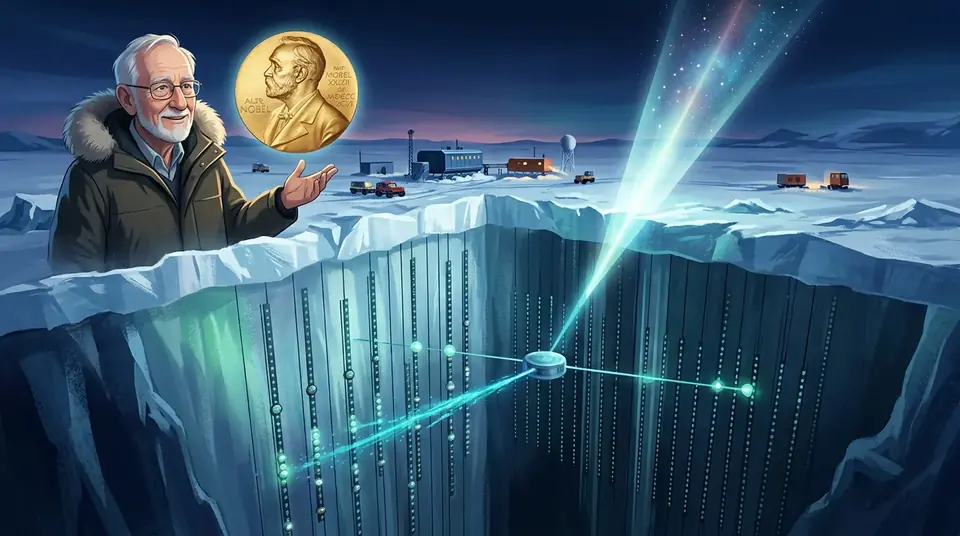
At a glance
- Belgian-American physicist Francis Halzen has won the 2026 Nobel Prize in Physics.
- He was honoured for his work on the IceCube Neutrino Observatory at the South Pole.
- The observatory detects high-energy 'ghost particles' called neutrinos from space.
Story so far
Belgian-American physicist Francis Halzen was awarded the 2026 Nobel Prize in Physics on Tuesday for his decisive contributions to the IceCube Neutrino Observatory. The observatory, a massive detector built into the ice at the South Pole, is designed to capture rare, high-energy neutrinos originating from distant cosmic events like exploding stars. The Royal Swedish Academy of Sciences praised Halzen's vision and leadership in creating a "new kind of astronomy" by detecting these elusive 'ghost particles'.
Latest development
Belgian-American physicist Francis Halzen has won the 2026 Nobel Prize in Physics for his pioneering work on the IceCube Neutrino Observatory, which detects high-energy subatomic particles known as neutrinos from a facility at the South Pole.
Latest Fact Checks
Nobel physics prize honours work on 'ghost messengers from space'
Belgian physicist Francis Halzen on Tuesday won the Nobel Prize in Physics for work on subatomic particles at the South Pole, the award jury said. “This year’s prize is about ghostly messengers from space,” Ellen Moons, secretary general of the Royal
'Ghost particle' hunter Francis Halzen wins 2026 Nobel Physics Prize
STOCKHOLM: Belgian-American particle physicist Francis Halzen won the 2026 Nobel Prize in Physics for ground-breaking work creating an observatory to detect some of the universe’s most elusive particles, high-energy neutrinos, and how they are creat
Responses