

IHC Reserves Order on Solitary Confinement Petitions for Khan, Bibi
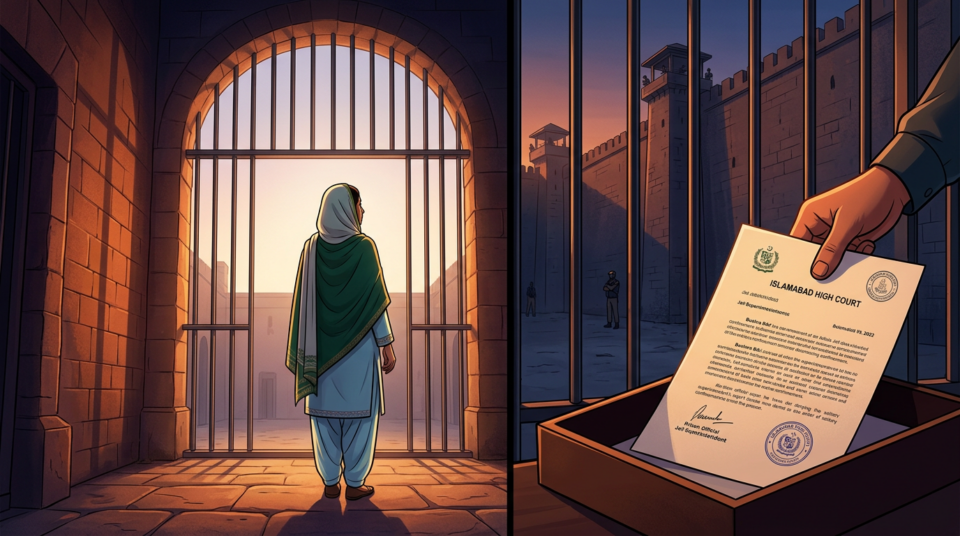
At a glance
- IHC reserves judgment on petitions challenging alleged solitary confinement of Imran Khan and Bushra Bibi.
- Adiala Jail report denies solitary confinement, citing security arrangements and B-class facilities.
- PTI previously rejected the jail report, claiming illegal restrictions on Imran Khan.
Story so far
Petitions were filed in the Islamabad High Court (IHC) by PTI founder Imran Khan and Bushra Bibi against their alleged solitary confinement in Adiala Jail. The Superintendent of Adiala Jail submitted a report to the IHC denying solitary confinement for Bushra Bibi and refuting claims of discriminatory treatment, stating she is treated in accordance with the law with additional security. The report also asserted that the practice of solitary confinement has been largely discontinued. The PTI subsequently rejected this report, claiming Imran Khan faces illegal restrictions. The IHC has now heard detailed arguments from all parties and reserved its order on these petitions.
Latest development
The Islamabad High Court (IHC) has reserved its order on petitions challenging the alleged solitary confinement of PTI founder Imran Khan and Bushra Bibi after hearing detailed arguments from both sides. The court will issue an order after examining the record.
Latest updates
The Islamabad High Court (IHC) has reserved its order on petitions seeking to declare the alleged solitary confinement of PTI founder Imran Khan and Bushra Bibi illegal. The court heard detailed arguments from both sides and will issue an order after examining the record, directing parties to submit any judgments they wish to rely on in writing.
During the hearing, Adiala Jail Superintendent Sajid Baig, Islamabad Advocate General Naveed Hayat Malik, and counsel for the petitioners Barrister Salman Safdar appeared before the court. The Advocate General argued that the petitions were not maintainable, stating that neither Imran Khan nor Bushra Bibi had been kept in solitary confinement. He maintained that prison authorities had provided them with facilities exceeding those available to B-class prisoners.
The Advocate General further submitted that Imran Khan had been housed separately from other inmates due to security considerations related to his political profile, but such arrangements could not be termed solitary confinement. He added that jail authorities had complied with previous court directions by providing newspapers and books. Superintendent Sajid Baig informed the court that Imran Khan had been provided more than 500 books and daily newspapers, and was not confined to a single cell for 24 hours, having access to a compound comprising seven cells where he could move freely during the day. He contended that the concept of solitary confinement requires a prisoner to remain locked in a cell continuously, which was not the case.
The Advocate General also argued that no court or competent authority had ordered solitary confinement for either Imran Khan or Bushra Bibi. The court also discussed the PTI founder's eye treatment, with the Advocate General stating it was unrelated to the current case. Justice Khadim Hussain Soomro remarked that a medical board report would have been beneficial, though the Superintendent later stated the eye issue had been resolved and a PIMS report was public.
The Pakistan Tehreek-e-Insaf (PTI) has rejected the Adiala Jail report submitted to the Islamabad High Court (IHC) regarding Bushra Bibi's confinement. The party claims that Imran Khan faces illegal restrictions.
The Islamabad High Court (IHC) has heard the solitary confinement case involving Bushra Bibi and the PTI founder. During the hearing, the jail report submitted by the Superintendent of Adiala Jail was challenged.
Latest Fact Checks
IHC reserves order on pleas against Imran, Bushra’s alleged solitary confinement
ISLAMABAD: The Islamabad High Court (IHC) on Thursday reserved its order on petitions seeking to declare the alleged solitary confinement of PTI founder Imran Khan and his spouse Bushra Bibi illegal after hearing detailed arguments from both sides. J
بانی پی ٹی آئی اور بشریٰ بی بی کی قیدِ تنہائی کیس، دلائل مکمل، فیصلہ محفوظ
اسلام آباد ہائیکورٹ میں بانی پی ٹی آئی اور بشریٰ بی بی کی مبینہ قیدِ تنہائی کو غیرقانونی قرار دینے سے متعلق درخواستوں پر سماعت کے دوران فریقین کے دلائل مکمل ہو گئے. جس کے بعد عدالت نے فیصلہ محفوظ کرتے ہوئے کہا کہ اس معاملے پر بعد میں حکم جاری کیا جائ


Responses