

Pakistan Issues Panda Bonds, Gains Access to Chinese Capital Market
The escalating rivalry between the United States and China, framed by the concept of the ‘Thucydides Trap’, is creating a new global geopolitical landscape with profound implications for Pakistan. Chinese President Xi Jinping’s reference to the historical pattern—where a rising power threatens an established one—signals Beijing’s growing confidence in its emergence as a global force. This shift away from its previous posture as a leader of the Global South challenges the post-1945 international order and places nations like Pakistan at a critical intersection of great-power competition and strategic realignment.
The emerging bipolar system is defined by sustained competition in technology, finance, and geopolitical influence. China’s economic might is underscored by a trade volume that exceeded $6 trillion in 2025 and its expanding influence in green technology and infrastructure. However, the US retains significant structural advantages through its dominance of global finance, military alliances, and leadership in key sectors like semiconductors. While China prefers to confine the rivalry to economic and technological domains to avoid military confrontation, it is increasingly expected to assume broader security responsibilities.
In this complex environment, Pakistan is pursuing a strategic balancing act between its deep economic ties with Beijing and its relationship with Washington. Islamabad has carved out a crucial role as a diplomatic intermediary, most notably by facilitating communication between the United States and Iran. This function is seen as vital not only for regional stability but also for Pakistan’s ability to maintain its strategic flexibility amid competing pressures from global powers.
Pakistan’s mediation efforts are reportedly supported by China, which seeks to protect its strategic interests in the Middle East while avoiding direct involvement in the US-Iran dispute. During a visit by former US President Donald Trump, the White House claimed China had given assurances it would not supply weapons to Tehran and agreed that Iran must not be allowed to develop nuclear weapons. While Pakistan’s Foreign Office has rejected any impression that it is acting under Chinese direction, its role as a trusted channel remains critical as neither Washington nor Tehran appears to have an immediate alternative.
Successfully navigating this diplomatic tightrope presents an opportunity for Pakistan to solidify its credentials as a reliable middle power, alongside countries like Saudi Arabia, Turkiye, Qatar, and Egypt. Strengthening its role as a mediator could enhance its ability to negotiate its economic and strategic interests more effectively on the global stage. This realist approach, focused on balance and diplomatic utility, is becoming central to Islamabad’s foreign policy as it manages its relationships with global powers and its enduring rivalry with India.
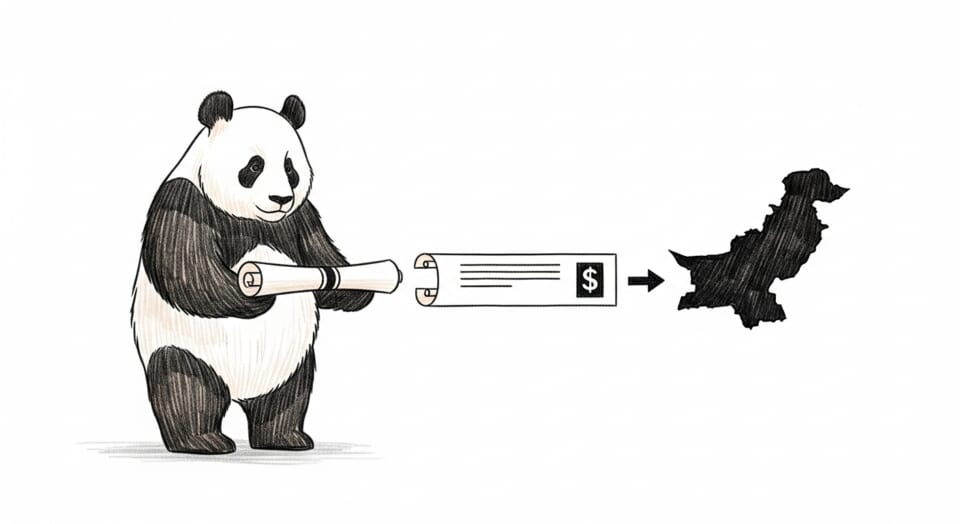
Pakistan has successfully debuted in the Chinese capital market, issuing its first-ever Panda Bond and raising RMB 1.75 billion at a remarkably low 2.5 per cent coupon rate. The landmark issuance was met with overwhelming investor demand of over RMB 8.8 billion ($1.26 billion), resulting in an oversubscription of more than five times. Finance Minister Muhammad Aurangzeb hailed the development as a new chapter in financial cooperation between Pakistan and China, a sentiment echoed by market observers who see it as a powerful sign of growing international confidence in Pakistan’s economy.
The scale of investor interest was particularly notable, as the demand for the inaugural tranche alone surpassed Pakistan’s entire planned Panda Bond programme size of RMB 7.2 billion ($1 billion equivalent). According to finance ministry adviser Khurram Schehzad, this is a “powerful reflection of growing international investor confidence in Pakistan’s economic outlook and reform trajectory.” The success sends a strong signal to global markets that the country’s economic recovery is gaining international recognition.
The issuance marks a strategic pivot in Pakistan’s external financing strategy, diversifying its funding sources beyond traditional Western capital markets. This move opens access to the world’s second-largest capital market, which can help reduce borrowing costs and broaden access to global liquidity pools. Financial consultants note this is a crucial step towards integrating Pakistan with China’s financial system, which could help familiarise Chinese investors with the country’s economic potential and eventually attract greater private investment.
The bond’s strong reception and favourable pricing were significantly bolstered by a robust support structure. Guarantees provided by the Asian Development Bank (ADB) and the Asian Infrastructure Investment Bank (AIIB) substantially reduced investor risk, enabling the bond to achieve a domestic AAA rating in China. While the 2.5% coupon is the lowest external borrowing cost in Pakistan’s history, analysts note the effective cost will be slightly higher once an estimated 0.5% to 1% fee for the credit enhancements is factored in.
Despite the milestone, experts caution that the bond’s success should be seen as an opportunity rather than a final solution to the country’s economic challenges. Structural vulnerabilities, including weak exports and a narrow tax base, remain unresolved. The proceeds from the bond are directed towards sustainable financing for water, energy, and health projects, aligning with global investment trends. Ultimately, this successful issuance provides Pakistan with crucial breathing space to undertake the difficult structural reforms necessary to break its recurring cycle of economic crisis and recovery.
Pakistan has successfully issued Panda bonds, marking its first-ever access to the Chinese capital market. Finance Minister Muhammad Aurangzeb described the development as a new chapter in financial cooperation between Pakistan and China. The move is expected to strengthen financial ties and is being presented as a sign of growing international confidence in Pakistan’s economy.


Reactions and comments