

DG ISPR Declines Comment on New Provinces Proposal
At a glance
- Interior Minister Mohsin Naqvi proposed referendums for new provinces.
- The proposal has met with varied reactions from political parties and legal experts.
- The DG ISPR has declined to comment on the matter.
Story so far
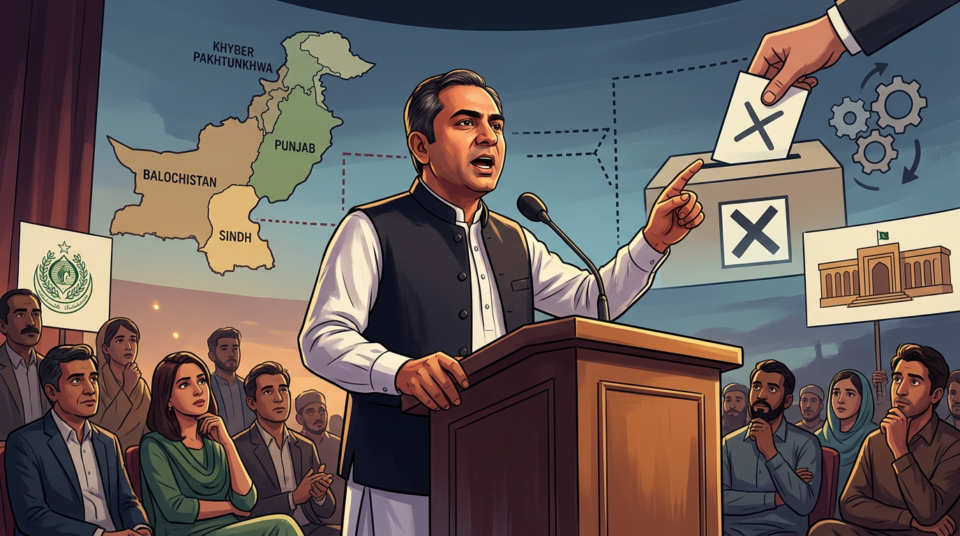
Interior Minister Mohsin Naqvi initiated a nationwide debate by proposing referendums to ascertain public opinion on the creation of new provinces, citing issues with the current system. He suggested that new administrative units should be formed if desired by the people, but not imposed if opposed, specifically mentioning Sindh. The Pakistan Peoples Party (PPP) referred the matter to its Central Executive Committee, emphasizing adherence to constitutional procedures requiring a two-thirds majority in assemblies. Sindh Chief Minister Syed Murad Ali Shah firmly rejected the idea for his province, calling Naqvi's stance "antiquated." Lawyers in Lahore termed the proposal unconstitutional, and Sindhi nationalist groups demanded the minister’s resignation.
Latest development
The Director General of ISPR has declined to comment on Interior Minister Mohsin Naqvi’s statement regarding the creation of new provinces.
Latest updates
The Director General of ISPR has declined to comment on Interior Minister Mohsin Naqvi’s statement regarding the creation of new provinces.
The ongoing debate regarding the creation of new administrative units now includes discussions about the potential for a Karachi province.
Ayaz Latif Palijo has termed Interior Minister Mohsin Naqvi's statement regarding the creation of new provinces as a conspiracy aimed at dividing Sindh.
The debate surrounding the creation of new administrative units has intensified, with a specific focus now on the potential for multiple new provinces within Punjab.
On Friday, Sindh Chief Minister Syed Murad Ali Shah described Interior Minister Mohsin Naqvi's proposal for new provinces as "antiquated." Speaking to the media, Shah stated that the people of Sindh are united in safeguarding their province's interests, and therefore, such proposals for the creation of new provinces cannot be accepted.
Interior Minister Mohsin Naqvi’s call for an overhaul of the country’s governance structure and the carving out of new administrative units has ignited an animated debate across the country. The Pakistan Peoples Party (PPP) has referred the question to its top decision-making forum, while the Sindh Chief Minister has flatly rejected the idea. Lawyers in Lahore have termed the proposal unconstitutional, and Sindhi nationalist groups have demanded the minister’s resignation.
Addressing the Pakistan Economic Summit in Islamabad on Thursday, Mr. Naqvi reiterated that the present system of governance had collapsed and was fundamentally incapable of resolving the country’s problems. He urged all political parties to sit together and settle every outstanding issue, including the creation of new units and provinces, warning that without structural change, similar debates would persist a decade from now. He described more administrative units as the only way to bring facilities closer to citizens, emphasized the need for new leadership, and argued that the country’s youth desired justice, merit, and jobs rather than stipends and laptops.
PPP Secretary General Nayyar Bokhari stated that the party’s Central Executive Committee would take up the question of new administrative units, insisting that the process must be constitutional rather than executive. Mr. Bokhari highlighted that the Constitution lays down a complete procedure, requiring a two-thirds majority in the relevant provincial assembly, the National Assembly, and the Senate for any change in provincial boundaries or the creation of new provinces. He stressed that new provinces could not be brought about through an executive order. He also called on Defence Minister Khawaja Asif to initiate the process in Punjab, noting that a resolution for a South Punjab province was already pending before the Punjab Assembly.
Mr. Naqvi also emphasized the importance of providing jobs purely on merit, addressing a significant concern among Pakistan’s youth, and highlighted concerns over Pakistan’s mounting debt burden, advocating for structural reforms and fiscal discipline.
Latest Fact Checks
‘New provinces’: Naqvi’s line of thinking antiquated: Sindh CM
HYDERABAD: Addressing the media on Friday, the Chief Minister of Sindh, Syed Murad Ali Shah, said that the line of thinking of the Interior Minister, Mohsin Naqvi, was antiquated. The chief minister was responding to the interior minister’s statement
Naqvi’s remarks ignite fresh debate in political circles
ISLAMABAD / HYDERABAD / LAHORE: Interior Minister Mohsin Naqvi’s call for an overhaul of the country’s governance structur e and the carving out of new administrative units has ignited an animated debate across the country, with the PPP referring the


Responses