

Transporters Reiterate August 8 Strike, Vow Peaceful Protest
At a glance
- Goods transporters to begin indefinite nationwide strike from August 8.
- Protest is against rising petroleum prices and government taxes.
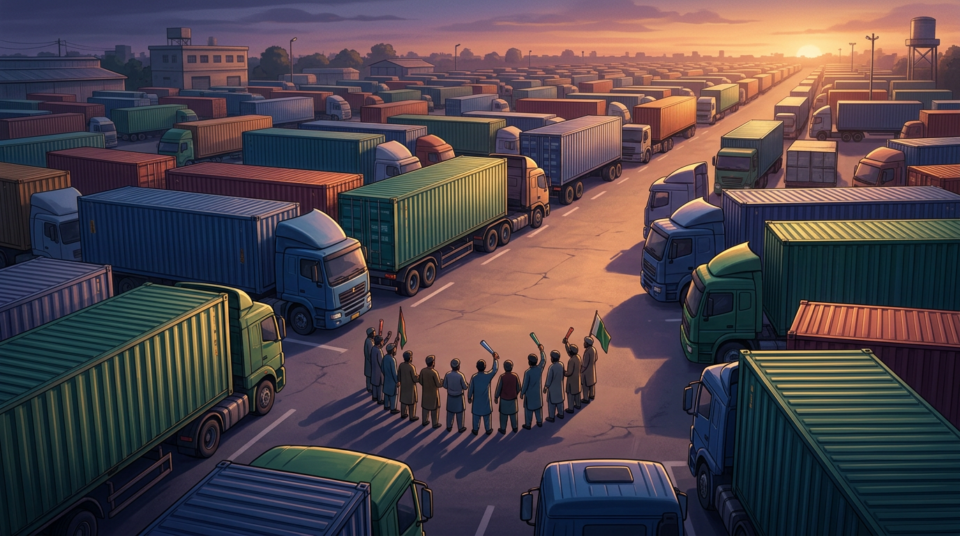
- Transporters clarified the strike will be peaceful, with vehicles parked and no road blockages.
Story so far
Goods transporters across Pakistan have announced an indefinite nationwide 'wheel-jam' strike, scheduled to begin on August 8. This protest is a response to what they describe as unsustainable and continuous increases in petroleum product prices and other government taxes. The All Pakistan Goods Transporters Alliance has presented a list of demands to the government, including the complete reversal of recent hikes in toll tax, restoration of fuel prices to their July 1, 2024, level, reduction in withholding tax, rejection of a provision allowing vehicle confiscation for non-duty-paid goods, and revision of fuel prices fortnightly or monthly. They also seek uniform implementation of axle-load regulations. The alliance has clarified that the protest will be peaceful, with vehicles parked and no road blockages.
Latest development
The All Pakistan Goods Transporters Alliance has reiterated its call for an indefinite nationwide 'wheel-jam' strike starting August 8. Alliance leaders clarified that the protest would be peaceful, with no roads being blocked; instead, only vehicles would be parked.
Latest updates
The All Pakistan Goods Transporters Alliance has reiterated its call for an indefinite nationwide 'wheel-jam' strike starting August 8. Leaders of the alliance clarified that the protest would be peaceful, with no roads being blocked; instead, only vehicles would be parked.
ISLAMABAD: All Pakistan Goods Transporters Owners Association and other transport bodies called a nationwide wheel-jam strike from August 8 and warned that the suspension of freight movement could disrupt the supply of essential commodities if the government failed to address their concerns. In a press conference at the National Press Club, leaders of the alliance said that the transport sector was facing an unprecedented financial crisis due to repeated increases in diesel prices, higher taxes and other government measures. Muhammad Owais Chaudhry Advocate, said that the current policies have pushed small transporters, vehicle owners who were paying instalments on financed trucks and drivers into severe financial hardship, making it increasingly difficult to continue operations.
The All Pakistan Goods Transporters Alliance formally announced the nationwide 'wheel-jam' strike from August 8. The announcement was made at a press conference by alliance leaders, including Muhammad Owais Chaudhry Advocate, President of the All Pakistan Goods Transport Owners Association, Malik Shafeeullah Awan, and Malik Nisar. They rejected a provision introduced in the Finance Act 2026 under which an entire vehicle could be confiscated if non-duty-paid goods were found on board, demanding its immediate withdrawal and restoration of the previous system. Transporters also called for an end to the daily adjustment of diesel prices, proposing revisions fortnightly or monthly, and for fuel prices to be restored to their July 1, 2024, level. They further elaborated that uniform implementation of axle-load regulations should involve checks at factories, warehouses, and loading points rather than through roadside enforcement.
The All Pakistan Goods Transport Ittehad, led by President Malik Shahzad Awan, announced that the nationwide 'wheel-jam' strike will be for an indefinite period, starting August 8. The association has demanded the resignation of Petroleum Minister Ali Parvez Malik. Further demands include reducing the withholding tax from 7% to 2%, abolishing Customs SRO 1619/2024, and repealing the law cancelling vehicles aged 10 to 20 years. They also called for the withdrawal of the 9.7 million Diyat law in accident cases, the issuance of HTV licenses for drivers, provision of parking facilities at Karachi Port and Port Qasim, improved law and order in Balochistan, and the cancellation of the Sindh government's third-party insurance.
Latest Fact Checks
آل پاکستان گڈز ٹرانسپورٹرز اتحاد نے 8 اگست سے ملک گیر پہیہ جام ہڑتال کا اعلان
آل پاکستان گڈز ٹرانسپورٹرز اتحاد نے 8 اگست سے ملک گیر پہیہ جام ہڑتال کا اعلان کیا ہے۔
Goods transporters say will observe strike from 8th
ISLAMABAD: All Pakistan Goods Transporters Owners Association and other transport bodies called a nationwide wheel-jam strike from August 8 and warned that the suspension of freight movement could disrupt the supply of essential commodities if the go


Responses