

US and Saudi Arabia Announce Civilian Nuclear Program Agreement
 3 days ago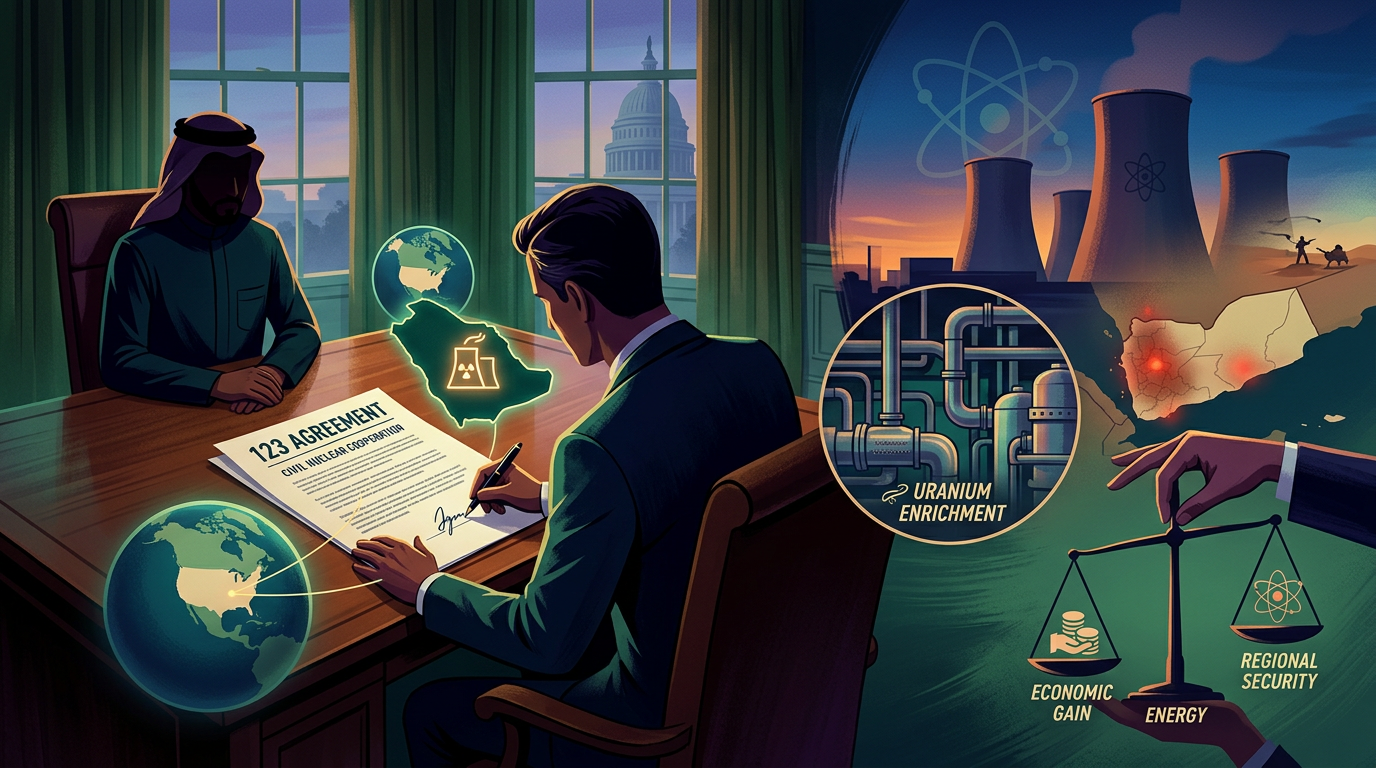
At a glance
- The United States and Saudi Arabia have announced a strategic agreement for a civilian nuclear program.
- The deal includes safeguards against non-proliferation and is expected to create a multi-billion-dollar partnership.
- US lawmakers and Israeli officials have expressed opposition, citing fears of nuclear weapons development.
Story so far
The United States and Saudi Arabia have reached a strategic agreement to establish a civilian nuclear program in the Gulf nation. This deal, known as a 123 Agreement, was signed by US Energy Secretary Chris Wright and Saudi energy minister Abdulaziz bin Salman. It is set to be submitted to Congress for review, though its implementation does not require congressional approval. The agreement notably does not include the 'Gold Standard' for uranium enrichment prevention or the 'Additional Protocol' for IAEA snap inspections. Washington insists the deal includes non-proliferation safeguards and aims to foster a multi-billion-dollar partnership. The move comes amidst US concerns over Iran's nuclear program and has drawn opposition from US lawmakers and Israeli officials fearing potential nuclear weapons development.
Latest development
The United States has officially announced a landmark deal with Saudi Arabia to establish a civilian nuclear program, with Washington emphasizing that the agreement includes safeguards against non-proliferation. This partnership is expected to lay the legal foundation for a decades-long, multi-billion-dollar collaboration.
Latest updates
Washington has officially announced a landmark civilian nuclear program deal with Saudi Arabia, with the US insisting the agreement includes safeguards against non-proliferation. This deal lays the legal foundation for a decades-long, multi-billion-dollar partnership that advances economic and strategic objectives, including nuclear nonproliferation.
The move by the United States under President Donald Trump comes amidst an ongoing conflict with Iran, which began partly due to US concerns over Tehran’s nuclear program. US lawmakers from both parties and Israeli officials have voiced opposition to a civilian nuclear project for Saudi Arabia, citing fears it could be converted to eventually develop nuclear weapons.
Saudi Arabia, like Iran, has long maintained its right to pursue a civilian nuclear program and last year signed a mutual defense pact with nuclear-armed Pakistan. Washington has also sought to integrate this nuclear agreement into a broader strategic initiative that would see Saudi Arabia normalize ties with Israel, alongside the signing of a US defense pact.
Amidst the announcement of a strategic agreement between the United States and Saudi Arabia for a civilian nuclear program, Iran has expressed confidence in Pakistan regarding this development.
Reports suggest that the US is providing an atomic bomb to Saudi Arabia. Additionally, it is reported that an Iranian missile is ready to reach the US.
President Donald Trump has reportedly issued a warning to Houthi rebels amidst the announcement of the US-Saudi civilian nuclear agreement. The deal has also drawn attention to Iran's response and the ongoing Bab al-Mandab crisis.
President Donald Trump has reportedly approved the historic civil nuclear partnership agreement between the United States and Saudi Arabia.
US President Donald Trump has approved a civil nuclear agreement with Saudi Arabia.
The United States and Saudi Arabia have officially announced a major strategic agreement to establish a civilian nuclear program for the Gulf nation.
Responses