

PMD Warns of Increased Flood Risk in Glaciated Regions
 3 days ago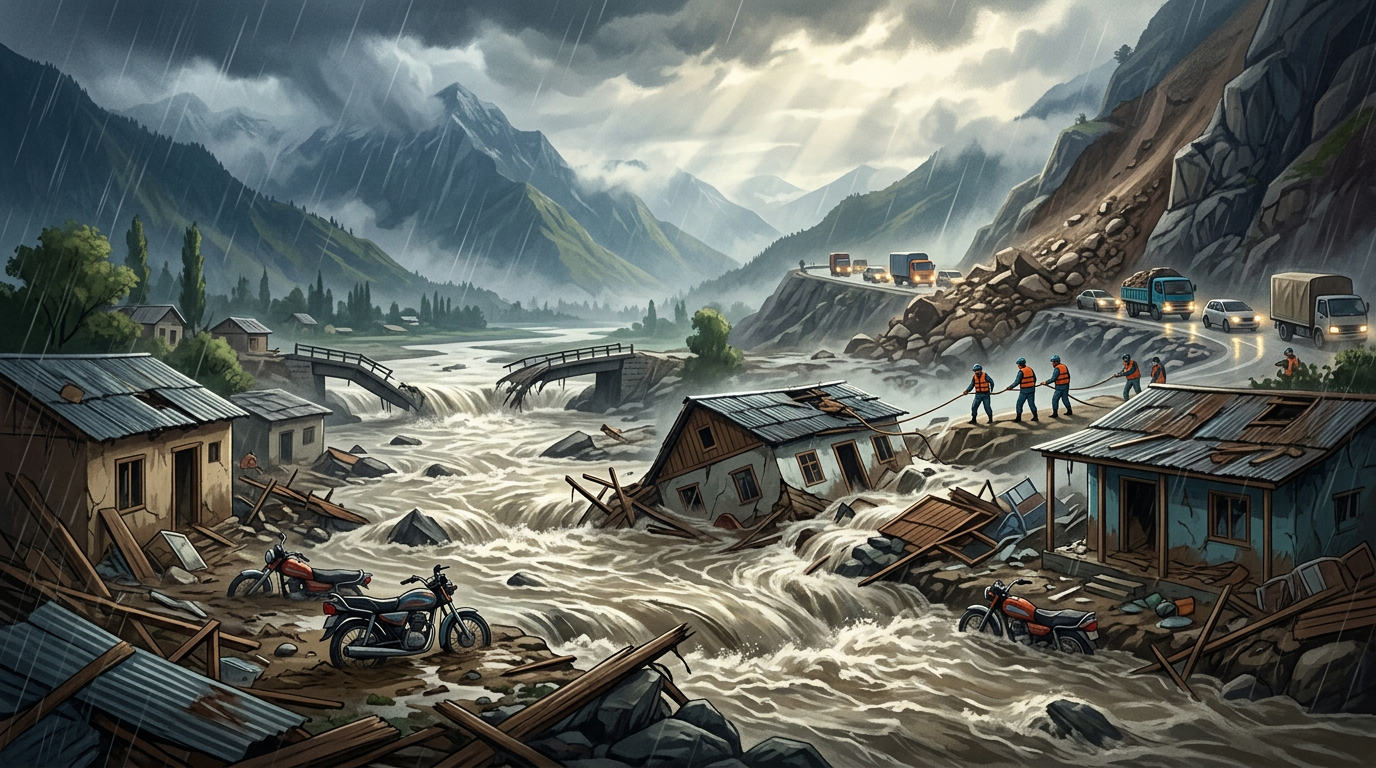
At a glance
- Heavy rainfall and cloudbursts have caused widespread destruction across Azad Kashmir, Khyber Pakhtunkhwa, Gilgit-Baltistan, and parts of Punjab.
- The Pakistan Meteorological Department (PMD) has warned of sharply rising water levels and increased flood risk in glaciated regions of Gilgit-Baltistan and Khyber Pakhtunkhwa.
- Rain-related incidents have led to 18 deaths in Khyber Pakhtunkhwa, with infrastructure damage and traffic disruptions reported.
Story so far
Pakistan has been experiencing widespread heavy rainfall and cloudbursts since July 19, leading to significant destruction across Azad Kashmir, Khyber Pakhtunkhwa, Gilgit-Baltistan, and parts of Punjab. The Provincial Disaster Management Authority (PDMA) in Khyber Pakhtunkhwa reported 18 deaths and 19 injuries, with numerous houses damaged or destroyed. Flash floods have disrupted major roads, swept away bridges, and affected agricultural land. The Pakistan Meteorological Department (PMD) now warns of sharply rising water levels in glaciated regions of Gilgit-Baltistan and Khyber Pakhtunkhwa due to snow and glacier melt combined with rainfall, indicating an increased risk of medium to high flood levels.
Latest development
The Pakistan Meteorological Department (PMD) has issued a warning regarding sharply rising water levels in rivers, streams, and nullahs across the glaciated regions of Gilgit-Baltistan and Khyber Pakhtunkhwa. This is attributed to accelerated snow and glacier melt combined with recent rainfall, increasing the likelihood of medium to high flood levels in vulnerable areas.
Latest updates
The Pakistan Meteorological Department (PMD) on Wednesday warned about sharply rising water levels in rivers, streams, and nullahs across the glaciated regions of Gilgit-Baltistan and Khyber Pakhtunkhwa. Real-time data from its hydrometeorological monitoring network indicates that many snow-fed and glacier-fed watercourses are currently flowing at peak values due to accelerated snow and glacier melt combined with recent rainfall.
These conditions could trigger riverbank erosion, land wasting, and localised flooding. The PMD added that there is an increased likelihood that the current high-flow situation could develop into medium or high flood levels in vulnerable valleys and downstream areas. Authorities, district administrations, and communities near rivers and streams have been advised to remain vigilant, avoid unnecessary movement near watercourses, monitor official updates, and be prepared for emergencies.
The city of Hafizabad has been reported as being under water due to heavy rainfall and flooding.
Heavy monsoon rains continue in Lower Dir, raising concerns over possible flooding in vulnerable areas. The district administration has moved to high alert and started precautionary measures to deal with any emergency situation.
Heavy rainfall has also caused destruction in various parts of Punjab, adding to the widespread damage already reported in Azad Kashmir, Khyber Pakhtunkhwa, and Gilgit-Baltistan.
The death toll from rain-related incidents and flash floods in Khyber Pakhtunkhwa has risen to 18. Four people, including a couple and their son and daughter, were killed in a roof collapse incident in Bangiwala village, Upper South Waziristan. The Pakistan Meteorological Department anticipates the current rain spell, which began on July 19, will continue until July 23 in the province.
Separately, a report from the Provincial Disaster Management Authority (PDMA) indicated 14 deaths and 19 injuries across the province since July 19, alongside 22 partially damaged and six destroyed houses. The PDMA confirmed that water levels in all rivers and streams are currently normal and advised district administrations to remain alert, providing helpline 1700 for public assistance.
Heavy rains have also caused landslides, blocking the Wana-Gomal Zam Road in Lower South Waziristan, a critical trade route. Flash floods have damaged agricultural land in several areas, with reports of large boulders, potholes, and damaged culverts, bridges, and protection walls making travel difficult.
Responses