
US Aircraft Fires on Tanker Attempting to Break Iran Blockade
At a glance
- US aircraft disabled an oil tanker attempting to breach the naval blockade of Iranian ports on July 15, 2026.
- The incident marks the first forcible halt since the blockade was reinstated on July 14, 2026.
- The US Central Command (CENTCOM) also redirected two compliant commercial vessels.
Story so far
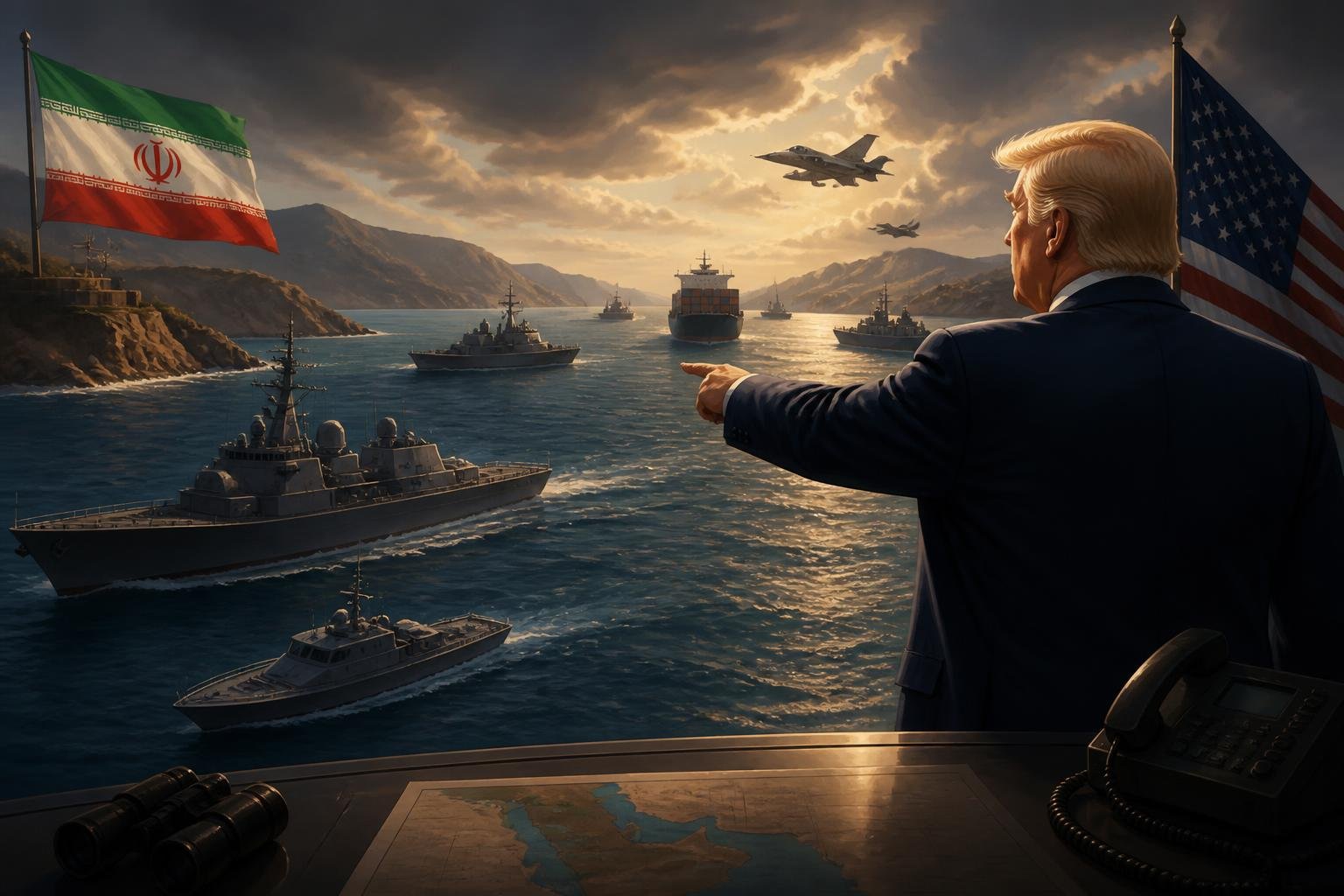
A naval blockade on Iran, announced by Trump, began on July 14, 2026, with the Strait of Hormuz identified as a key area for naval operations. The US Central Command (CENTCOM) confirmed the renewed naval blockade of Iranian ports. On July 15, 2026, a US aircraft fired on and disabled an unladen oil tanker, the Curacao-flagged M/T Belma, as it attempted to breach the naval blockade of Iran’s ports.
Latest development
On July 15, 2026, a US aircraft fired on and disabled an unladen oil tanker, the M/T Belma, as it attempted to break the naval blockade of Iran’s ports. This is the first forcible halt since the blockade was reinstated.
Latest updates
A US aircraft fired on and disabled an unladen oil tanker on Wednesday as it attempted to breach the naval blockade of Iran’s ports. The US military confirmed that the aircraft disabled the Curacao-flagged M/T Belma after firing Hellfire missiles into its smokestack, preventing its transit to Iran.
This marks the first time the United States has forcibly halted a vessel since reinstating the ports blockade at 2000 GMT on Tuesday. The US Central Command (CENTCOM) also reported redirecting two compliant commercial vessels within the first 24 hours of enforcing the blockade.
The US Central Command (CENTCOM) has announced a renewed naval blockade of Iranian ports.
Iran’s Islamic Revolutionary Guard Corps (IRGC) has threatened to close “all other export corridors that benefit the US and its allies,” following Iran’s closure of the Strait of Hormuz and the US reimposition of a naval blockade. The IRGC stated that "Regional energy exports are either shared by all, or denied to all."
Analysts suggest that Iran may utilize its Houthi allies in Yemen to shut the Bab el-Mandeb gateway to the Red Sea, potentially opening a new front against Washington. A senior Houthi official warned that closing the Bab el-Mandeb Strait could send oil prices soaring to $200 a barrel if Saudi Arabia continues to attack Yemen. This comes after Houthi forces fired missiles at Saudi Arabia, accusing the kingdom of bombing an airport under their control, thereby breaking a four-year truce. The Houthis have previously demonstrated their capability to disrupt global commerce through the Bab el-Mandeb, having launched attacks on commercial shipping in the Red Sea after the Gaza war erupted in October 2023.
Oil prices surged to a one-month high on July 15, 2026, following renewed hostilities between the United States and Iran. This escalation includes Iranian retaliatory strikes on US infrastructure in the region and fresh US strikes aimed at degrading Iranian capabilities against commercial shipping in the Strait of Hormuz.
Tehran has reportedly again closed the Strait of Hormuz. President Trump stated in an interview that the US would "ultimately hit energy targets." Iran's army claimed early on July 15, 2026, to have launched drone attacks against US positions at Jordan’s Azraq base. Iran’s Islamic Revolutionary Guard Corps also claimed to have targeted weapons and storage facilities in Bahrain and Kuwait, though these reports remain unverified. The recent flare-up has raised doubts about the durability of a truce reached in June.
The United States has reportedly resumed its blockade of Iranian ports on July 14, 2026. This development follows an earlier announcement regarding a plan to reinstate the naval blockade, which was set to begin on the same date.
Iran has announced its full control over the Strait of Hormuz. This development follows the previously announced naval blockade on Iran, which was set to begin today, July 14, 2026, with the Strait of Hormuz identified as a key area for naval operations.
A strong Iranian response has been triggered by the blockade warning issued by Trump.
The US naval blockade on Iran is set to begin at 1 AM on July 14, 2026. China has called for the Strait of Hormuz to remain open.
The conflict between the United States and Iran is escalating. Donald Trump issued a blockade warning, which has triggered a strong Iranian response. Tensions are particularly focused around the Strait of Hormuz, contributing to a broader Middle East crisis.
Pakistan News will update this story as more confirmed details become available.
A new statement from Donald Trump regarding the Strait of Hormuz has reportedly created a stir. This statement is linked to Iran threats and concerns about nuclear sites being under danger, amidst an escalating Middle East war.
On July 14, 2026, Iran announced its intention to prevent US interference in the Strait of Hormuz. Abbas Araghchi stated that Iran will always remain the guardian of the Strait of Hormuz. This announcement, which put global markets on alert, comes as the US President claimed America would protect the Strait of Hormuz.
Responses