

Federal Budget 2026-27 Presentation Date and Delays
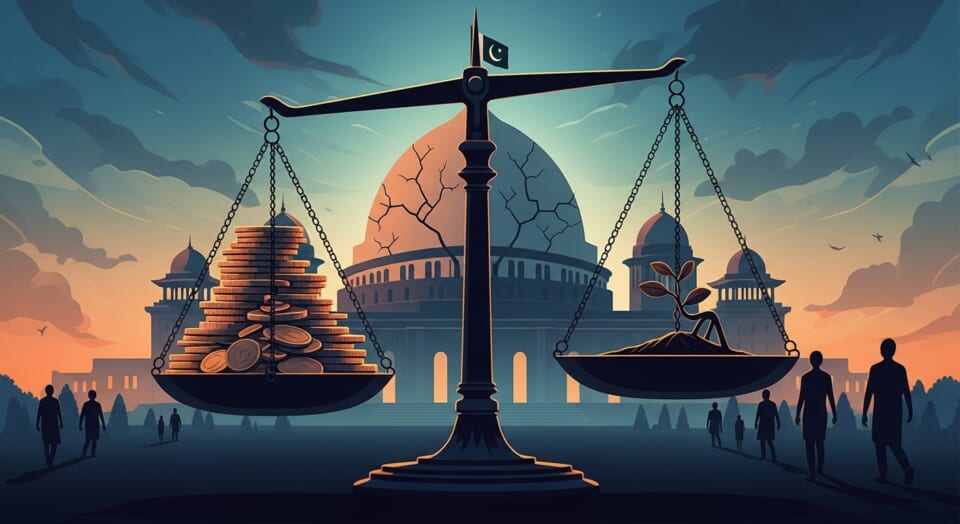
The Federal Budget presentation date has been changed, which is a major government announcement. The government revised the Budget 2026-2027 presentation schedule. There is a budget delay, and the Budget 2026 date has been revealed, with the likely presentation on June 10. This is an update regarding the Pakistan Budget, which is likely to be presented.
 Latest Updates
Updated: 11:20 AM PKT — June 3, 2026
The federal budget for the fiscal year 2026-27 will now be presented on June 10, Parliamentary Affairs Minister Dr Tariq Fazal Chaudhry has officially confirmed. The minister cited the need for consultations to “convince the allies” in the ruling coalition as the reason for the delay from the previously scheduled date of June 5, refuting rumours of any new legislation being passed before the budget.
The National Economic Council is set to approve the macroeconomic framework, which targets 4% economic growth and 8.2% inflation for the upcoming fiscal year. The budget is being formulated under the close supervision of the International Monetary Fund, with reports indicating that development funds for most sectors have been trimmed to create fiscal space for highways and schemes for coalition partners and ruling party lawmakers.
Updated: 10:50 AM PKT — June 3, 2026
The presentation of Pakistan’s federal budget has been delayed, with government sources indicating it is now likely to take place on June 10 instead of the previously scheduled June 5. The postponement is reportedly due to unresolved issues in negotiations with the International Monetary Fund (IMF).
Key disagreements revolve around settling fiscal measures, including the matter of funds to be relinquished by the provinces for federal spending. While the budget presentation is delayed, the parliamentary session will proceed on June 5 to allow for debate on the matter.
Updated: 10:19 AM PKT — June 3, 2026
Ahead of the upcoming federal budget, the Pakistan Institute of Development Economics (PIDE) has proposed a 12.5% increase in the national minimum monthly wage, suggesting it be raised from Rs 40,000 to Rs 45,000 for the fiscal year 2026-27. The proposal, submitted to the Planning Commission, recommends a data-driven system and suggests varying rates across provinces: Rs 46,000 for Sindh, Rs 45,500 for Balochistan, and Rs 45,000 for Punjab and Khyber Pakhtunkhwa. PIDE also highlighted the significant challenge of enforcing wage laws, with over 80% of the country’s workforce employed in the informal sector.
Meanwhile, the presentation of the federal budget, originally scheduled for June 5, has been officially postponed, along with a meeting of the National Economic Council. While a new date has not been finalized, reports suggest June 10 is the most likely day for the budget to be tabled.
Updated: 7:46 AM PKT — June 3, 2026
As the federal budget approaches, economists warn that Pakistan’s economy is trapped in a low-growth equilibrium due to prolonged IMF-mandated austerity measures, leading to ‘stabilisation fatigue’ among businesses and households. The upcoming budget is widely expected to continue this path of fiscal restraint to meet binding IMF revenue targets, leaving little room for growth-oriented policies or significant public relief.
Analysts note that while stabilization policies have helped avert a balance-of-payments crisis, they have come at a high social cost, including eroded purchasing power and industries operating below capacity. Experts are calling for a fundamental redesign of the economic model towards export-oriented, productivity-led growth rather than continued crisis management.
Updated: 6:45 AM PKT — June 3, 2026
As the Federal Budget 2026-27 approaches, expectations are that the government will focus on broadening the tax base and enhancing enforcement rather than introducing sweeping new taxes. A significant policy shift may involve bringing large agricultural incomes into the tax net, a long-standing demand from economists, while small farmers are expected to remain exempt. Some modest relief may be offered to the heavily-documented salaried class through revised tax slabs.
However, the primary burden on the public is anticipated to come from indirect taxation. Increases in petroleum levies, potential new carbon levies, and higher electricity and gas tariffs are likely as the government seeks to raise revenue and stabilize the energy sector. The budget’s ultimate test will be its fairness and whether it can compel wealthy individuals with untaxed assets to contribute their share, shifting the fiscal burden away from ordinary citizens.
Updated: 2:42 AM PKT — June 3, 2026
The federal budget session scheduled for June 5 has been postponed, with a new date yet to be decided. The delay follows a failure to resolve concerns raised by the Pakistan People’s Party, a key coalition partner.
Negotiations held Tuesday night between the government and the PPP at the Ministry of Finance did not lead to a breakthrough. The PPP reportedly feels it was not taken into confidence regarding the budget’s preparation and is also opposed to certain legislation the government wishes to pass before the budget presentation. Another round of talks is expected to take place.
Updated: 7:31 PM PKT — June 2, 2026
As the government prepares to present the federal budget for fiscal year 2026-27, it confronts a challenging economic landscape marked by a divergence between optimistic international projections and stark domestic realities. The State Bank’s recent decision to raise the policy rate to 11.5% contrasts with IMF forecasts of 3.5% growth and lower inflation, highlighting underlying pressures from geopolitical events impacting energy prices, a widening current account deficit, and declining foreign investment.
Analysts note that severe structural issues will dominate the budget-making process. These include a narrow tax base that burdens the formal sector, while major segments like agriculture and real estate remain undertaxed. With debt servicing consuming a vast portion of federal revenues and the energy sector’s circular debt reaching an estimated Rs 5.2 trillion, the government faces limited fiscal space for development and social spending, forcing a difficult choice between stabilization measures and policies to spur economic growth.
[activity-stream-raw include=”33953,33959,33960,33937,33886,33896,33757,33648,33527,33573,33593,33622,33471,33531,33532,33501,33444,33429,33430,33431,33373,33397,33317,33347,33334,33322,33330,33171,33147,33152,33220,33096,33077,33097,33099,33209,33179,33101,33104,33010,32972,32954,32940,32887″ per_page=20 display_comments=0 sort=DESC]


Reactions and comments